The hardest problem in home robotics has never been walking — it is grasping. Norwegian-American startup 1X Technologies believes it has cracked it, unveiling a completely redesigned hand for its Neo home humanoid with 25 force-controlled degrees of freedom, fingertip sensing that can detect shear and slip, and a production target of 10,000 hands built in-house this year. The new hands will ship on every Neo delivered to households, and founder Bernt Børnich is billing them as the most advanced robotic hands ever made.
What 1X Actually Built
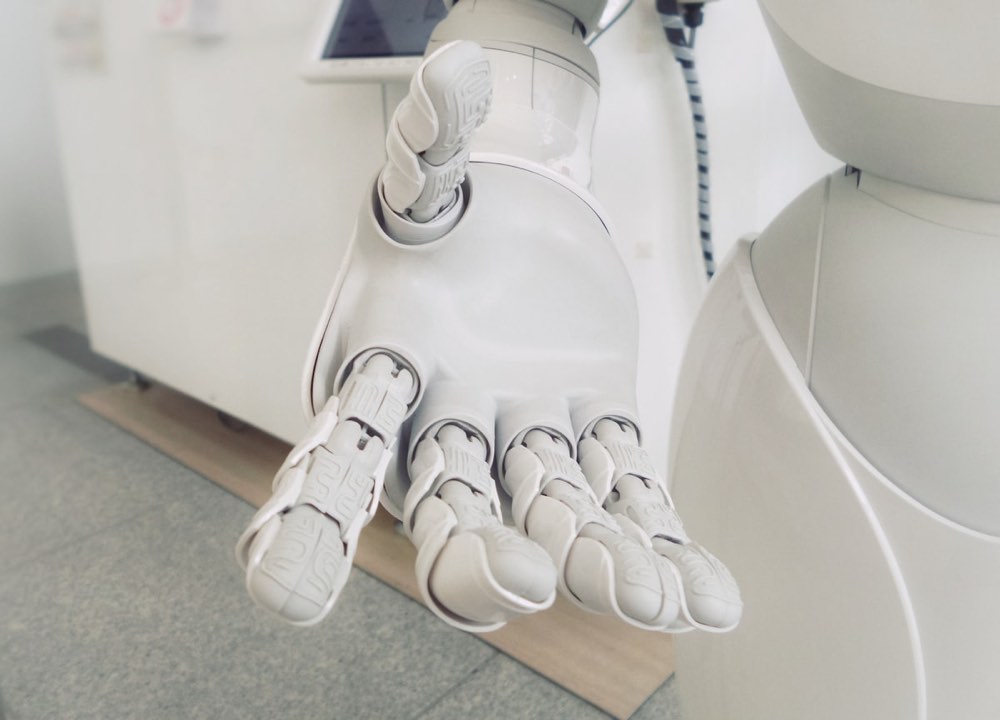
Announced on July 9 and detailed in coverage from Forbes and Dezeen, the hand packs 22 fully actuated degrees of freedom into the fingers and palm, plus three more at the wrist. The distinction matters: many competing humanoid hands advertise similar joint counts, but a large share of those joints are passive, spring-loaded followers. 1X's head of product, Dar Sleeper, has argued that a degree of freedom you cannot actively drive and sense is a spec-sheet number, not a capability.
The mechanical approach is unusual. Instead of the high-ratio gearboxes typical of robotic joints, 1X uses a quasi-direct-drive tendon system — its in-house 1X Tendon Drive — with gear ratios between roughly 5:1 and 15:1, compared with the 100:1 to 200:1 common elsewhere. Low gearing makes every joint natively force-controlled and fully backdrivable, meaning the hand can feel what it touches rather than simply crushing or fumbling it.
Headline specifications from the announcement:
- Positioning accuracy of ±0.2 mm for fine manipulation tasks
- Peak torque of 3.5 Nm at the thumb's base joint and 2.6 Nm at the finger knuckles, with fingertip flexion forces up to 45 N
- Tactile sensing across fingertips and hand surfaces for pressure, contact location, and shear, with real-time slip detection
- IP68 waterproofing and food-safe materials, tested across millions of interaction cycles — the robot can literally wash its own hands
From Lego Bricks to Kettlebells
Capability claims in humanoid robotics are cheap; demonstrations are the currency that counts. 1X's launch material showed the new hands assembling Lego, picking up loose screws and coins, installing a light bulb, driving a screwdriver, plugging in a USB-C cable, zipping a jacket, handling a wine glass, pouring tea, and catching a soft ball mid-air.
The range is the point. The same hand that lifts a 20-pound kettlebell can pluck individual grapes from a stem without bruising them — a strength-to-delicacy span that has eluded robotic grippers for decades. Dezeen reports the design brief was explicit: match or surpass human hand capability, because homes are built entirely around what human hands can do. Door handles, cutlery, laundry, jar lids — none of it was designed for two-fingered industrial pincers.
The Home Robot Race Tightens
Neo is priced at $20,000, or $499 per month with a refundable $200 deposit, and 1X has been steering toward first household deliveries this year against a reported backlog of more than 10,000 pre-orders. As of mid-July, no customer deliveries had been independently verified, and the company's statements point to a staggered rollout matched to its 10,000-unit annual factory capacity.
The announcement lands in a crowded moment for consumer-facing humanoids. China's UBTech says it has logged more than 13,000 orders for its $17,600 UWORLD U1 companion robot, while Figure AI and Tesla remain focused on industrial deployments before any home push. Notably, Agility Robotics — the sector's first US public-market entrant — has explicitly declined to promise home robots anytime soon, making 1X's household-first strategy one of the boldest bets in the field.
Why It Matters
Hands are the bottleneck through which the entire home robotics market must pass. A humanoid that cannot manipulate the endless variety of objects in a real kitchen is a very expensive novelty, no matter how gracefully it walks. If 1X's tendon-driven design delivers even most of what its demos suggest, it shifts the industry's frontier from locomotion and balance — largely solved problems — to the messy, contact-rich manipulation tasks that define useful domestic work.
The manufacturing angle is equally significant. Building 10,000 sensor-dense, 25-degree-of-freedom hands in-house within a year would represent a scale of dexterous-hardware production no company has attempted. Success would pressure every competitor to abandon simplified grippers; failure would reinforce the skeptics' case that human-level manipulation remains years away. Either way, the first verified Neo home deliveries — and what those hands can actually do unsupervised in a stranger's kitchen — will be the moment the home humanoid era truly begins or stalls.