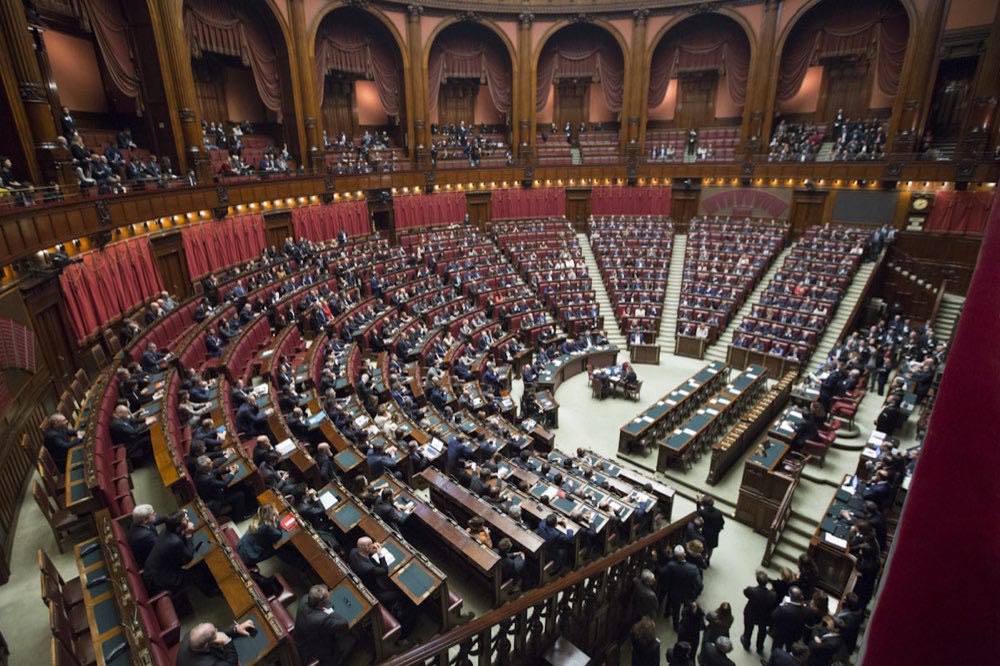
The largest copyright payout in US history now belongs to the AI era. A federal court gave final approval on July 22, 2026 to a $1.5 billion settlement in Bartz v. Anthropic, resolving claims that the AI company used pirated books to help train its Claude models. The number is historic — but the ruling deliberately answers far less than its size suggests, leaving the defining legal question of the AI age unresolved.
The Largest Copyright Recovery on Record
The US District Court for the Northern District of California approved the agreement covering roughly 482,000 works at an implied rate of about $3,113 per book — the largest publicly reported copyright recovery in US history. The case turned on a distinction the presiding judge, William Alsup, had drawn earlier: AI companies may train on books they legally purchased, but not on pirated copies. "Anthropic had no entitlement to use pirated copies for a central library," Alsup wrote.
That framing is the crux. The settlement does not punish AI training as such. It punishes the acquisition of training material through piracy. Companies that license or buy their data sit on very different ground than those that scraped shadow libraries — a distinction that will shape how every major lab sources its next dataset.
A Narrow Resolution, by Design
For all its scale, the deal is remarkably contained. It resolves Anthropic's liability only for the past acquisition and use of a defined set of pirated works before an August 2025 cutoff. Critically, it does not:
- Create a forward-looking license for AI training going forward.
- Address output-based infringement — the question of whether a model's generations copy protected work.
- Establish any industry-wide rule that binds other AI developers.
Judge Alsup's earlier summary-judgment ruling was also left intact, meaning the Ninth Circuit Court of Appeals will have to wait for a different case to weigh in on the broader question of AI and fair use. In effect, the parties bought certainty for one company's past conduct while leaving the central doctrine untouched. For AI developers hoping the settlement would clarify the rules of the road, it does the opposite: it prices one specific sin — training on pirated books — without licensing the practice of training itself.
The Bigger Fight Is Still Coming
The unresolved question — whether training AI on copyrighted works without a license qualifies as fair use — remains live and is heading toward other courtrooms. A closely watched music case is on the near horizon: a summary-judgment hearing in the District of Massachusetts involving Suno and Udio, whose models trained on sound recordings, is expected before Chief Judge F. Dennis Saylor IV.
That case matters far beyond music. The legal test at its core applies identically to text, images, code and video. However a court rules on whether AI systems can train on copyrighted sound recordings without permission, the reasoning will reverberate across every modality and every major lab. The Anthropic settlement, by contrast, sidestepped that reckoning entirely by focusing on how the training data was obtained rather than whether training on it was lawful.
Why It Matters
The dollar figure sets an unmistakable marker: sourcing training data from pirated repositories now carries potentially catastrophic financial exposure. At more than $3,000 per work across nearly half a million titles, the math is a direct warning to every AI company still relying on murky data provenance. Expect an industry-wide scramble toward licensed corpora, documented acquisition trails, and auditable data pipelines — the compliance scaffolding that separates a defensible dataset from a billion-dollar liability.
Yet the settlement's narrowness is its most important feature for policy watchers. The AI industry did not get the clarity it wanted, and neither did rights holders. The foundational question of fair use — the single issue that will determine the economics of training frontier models — remains open, deferred to future litigation and, quite possibly, eventually to Congress or the appellate courts.
For now, the lesson is precise rather than sweeping. Buy your data, don't steal it is enforceable and expensive. Whether you can train on lawfully obtained copyrighted work without a license is still anyone's guess — and that ambiguity, not the record settlement, is what will define the next phase of AI copyright law.