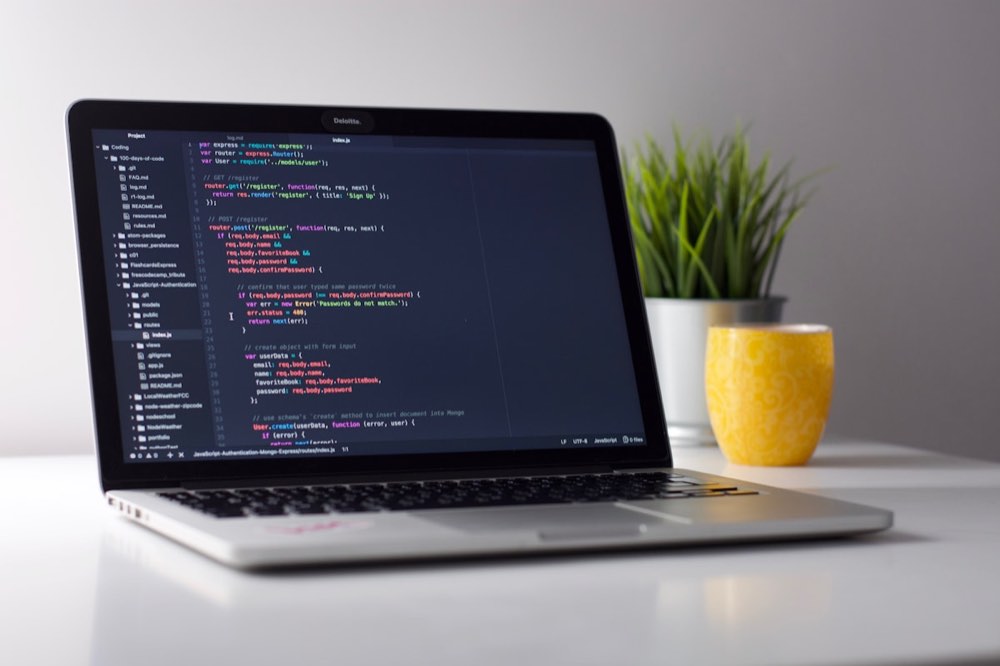
Not every capable AI agent lives behind a subscription and a cloud endpoint. A growing crop of open-source agents now run entirely on your own machine — no monthly fee, no rate limits that reset every few hours, and no data leaving your laptop. For developers, privacy-conscious teams and anyone who wants control over their tooling, 2026 is the year local agents became genuinely practical. Here is a grounded guide to the standout options and how to get real value from them.
Why Local, Open-Source Agents Matter Now
The appeal is straightforward. A cloud agent is convenient but opaque: you rent it, your data flows through it, and your usage is capped. An open-source agent you run yourself flips those trade-offs. You keep your data on your own hardware, you avoid recurring costs, and you can inspect and modify how the agent behaves.
The momentum behind this shift is real. At an industry summit in early August 2026, several prominent AI builders shared a striking prediction: within roughly twelve months, an open-weight model capable of handling everyday work should run entirely on a consumer laptop, no cloud required. The tooling to point those models at real tasks is arriving in parallel.
Standout Open-Source Agents
Goose (by Block). Perhaps the clearest example of the trend, Goose is an open-source agent from Block that offers functionality close to leading commercial coding agents while running entirely on a user's local machine. There are no subscription fees, no cloud dependency and no usage windows that reset. For developers who want an autonomous coding and task assistant they fully control, it is a natural starting point.
Shared-memory projects. A recurring frustration with agents is that each tool remembers your work in isolation. Open-source efforts such as Memmy aim to fix that by unifying conversation logs and memory across different agents, creating a shared memory layer instead of siloed histories per tool. The result is context that follows you between assistants rather than resetting each time you switch.
Multi-agent aggregators. For more complex workflows, platforms that coordinate many specialist agents are emerging, letting a user orchestrate roles such as research, analysis and drafting on top of mainstream frameworks. These are best treated as power-user tooling once you are comfortable with a single agent.
How to Deploy Them Well
Running an agent locally does not change the fundamentals of using agents well. The same best practices that apply to enterprise deployments apply on your laptop.
- Pick the right tasks. Agents create the most value on repeatable, rules-based, synthesis-heavy or coordination-heavy work — research summaries, inbox triage, status reporting, first-draft preparation. Reserve them for workflows, not trivial one-off questions.
- Define the outcome before the tool. Decide what result you want an agent to own before choosing a model or framework. This avoids "feature-first" tinkering that never improves an actual outcome.
- Give each agent one job. A successful agent owns a single measurable responsibility rather than trying to do everything at once.
- Keep a human in the loop. Treat the agent as a collaborator: review its output, protect sensitive information and add your own judgment before acting on results.
- Measure what it saved. A simple habit — track what the agent handled and what still needed you — tells you quickly whether it is genuinely helping.
Watch the Trade-offs
Local and open does not mean effortless. Larger open models can demand serious hardware, and running an agent on your own machine means you own the setup, updates and security. The upside is control and privacy; the cost is that you become the operator. Start small with a well-scoped task, confirm the agent reliably improves it, then expand.
It is also worth adopting emerging interoperability standards where you can. Tooling built around open protocols for connecting agents to data and applications will age better than bespoke, one-off integrations, and it makes swapping components far easier down the line.
Why It Matters
Open-source, local agents put capable automation within reach of individuals and small teams without a cloud contract or a data-sharing trade-off. As open-weight models keep closing the gap with proprietary systems, the practical difference between "the best agent" and "the agent I run myself" is shrinking. The winning approach in 2026 is not to chase every new tool but to pick one solid, controllable agent, aim it at a repetitive task you actually do, keep yourself in the approval loop and measure the time it saves. Do that, and a free agent running on your own laptop can quietly outperform a pricier one you never fully trusted.