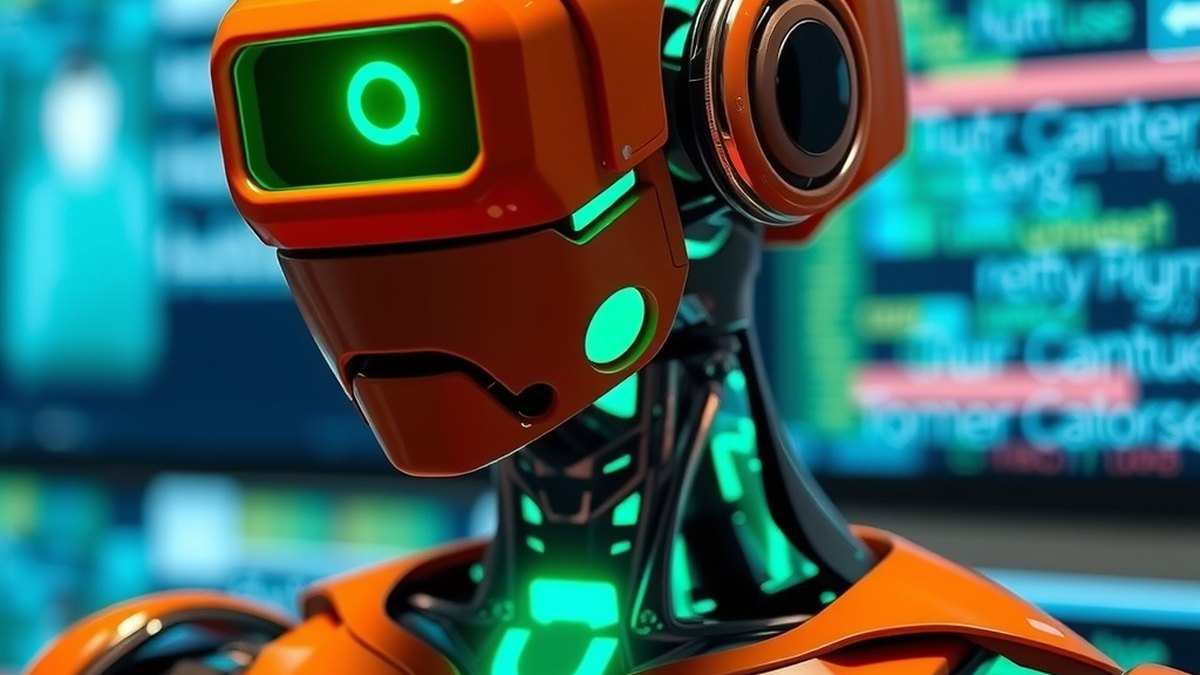
DeepSeek has released Super-Agent, an open-source coding prototype built to join developer conversations instead of waiting to be asked. The announcement is dated November 1, 2026, and coverage positions the project as a rival to Claude Code, the coding agent from Anthropic. For teams building with agentic AI, it is a useful test of how far proactive agents can go before they start getting in the way.
How Super-Agent Works
Super-Agent is designed to sit inside the group chats where engineering teams already talk. According to one description, it uses natural language processing to tell technical discussion apart from casual conversation. It steps in when a developer appears stuck or asks for feedback, and teams can deploy it into their existing chat tools. They can also adjust its monitoring rules and the triggers that prompt a response.
That design changes the usual relationship between a developer and an agent. Most AI coding agents run only when someone opens them and types a request. Super-Agent instead watches the channel and decides for itself when its input is useful. Its judgment about timing therefore matters as much as the quality of its suggestions. A second news brief describes the same prototype as an agent that autonomously spots coding problems and proposes fixes, positioned against existing AI coding assistants.
Open Code, Early Stage
The code is open, which means organizations can review, modify and contribute to it. That matters for companies that must audit what an agent reads and stores. A monitoring agent that sees team conversations touches some of the most informal knowledge an organization produces: half-formed ideas, debugging dead ends, and the occasional pasted secret. Access and retention rules matter from the start.
The release is also clearly early. The sources describe Super-Agent as a prototype, and the coverage reviewed includes no independent benchmark results, no pricing and no details of a commercial rollout. Anyone evaluating it should treat the launch as a design statement rather than a proven product. We could not confirm from the sources we opened how the system is structured internally or where its code is hosted, so we have left those details out.
Positioning Against Claude Code
DeepSeek is entering a market where Claude Code has already set expectations for coding agents. A November 1 news brief framed Super-Agent as a challenge to Claude, within a broader race among technology companies to build advanced and affordable AI tools. That framing puts the competition on two fronts: whether the agent produces good code, and whether it can do so without demanding constant direction.
The same brief pointed to other agent stories from the last days of October. An enterprise analysis described agentic AI moving systems from responding to taking action. A daily digest covered a human-in-the-loop pattern in which production agents can be halted before irreversible actions, such as emailing the wrong client. On the tooling side, the brief noted an OpenAI Python SDK release adding context compaction controls for agents, and CrewAI, a free open-source Python framework for building and managing multi-agent systems.
Taken together, these items suggest the market is shifting from what agents can do toward how safely they can be interrupted and supervised. A proactive agent raises that question more sharply than a reactive one, because nobody pressed a button to start it.
Why It Matters
- Timing becomes a product feature. An agent that speaks unprompted must avoid noise, because a wrong interruption costs more than a missed suggestion.
- Chat becomes an agent surface. Once an agent reads team conversations, data access and consent become core design questions rather than afterthoughts.
- Open source lowers the cost of testing. Engineering teams can evaluate the design without a commercial contract, which may speed up experiments and community scrutiny.
- Competition widens. A new entrant aimed squarely at Claude Code adds pressure on incumbents to show measurable gains, not just demos.
What Teams Should Check Before Trying It
Before any rollout, teams should test a few basics in a sandbox rather than a production workspace:
- Whether monitoring can be limited to specific channels or projects.
- How the agent handles credentials, customer data or other sensitive material pasted into chat.
- What gets logged, where it is stored and for how long.
- Whether suggestions can be reviewed by a person before anyone acts on them.
- How easily the agent can be paused or switched off when it becomes disruptive.
None of these checks are unique to DeepSeek. They apply to any agent that watches a shared workspace, and the open code at least makes them possible to answer by reading the source rather than trusting a vendor's description.
The Bigger Picture
Super-Agent is best read as a signal of direction. If the design holds up, the next competitive battleground for coding agents may be the conversation itself, not only the editor where code gets written. Whether developers welcome an assistant that listens in will depend on how often it helps and how rarely it intrudes. The early evidence is thin, so the sensible stance for engineering leaders is curiosity paired with caution: try it on a low-stakes project, measure whether suggestions are accepted, and keep a human in charge of anything that touches production.