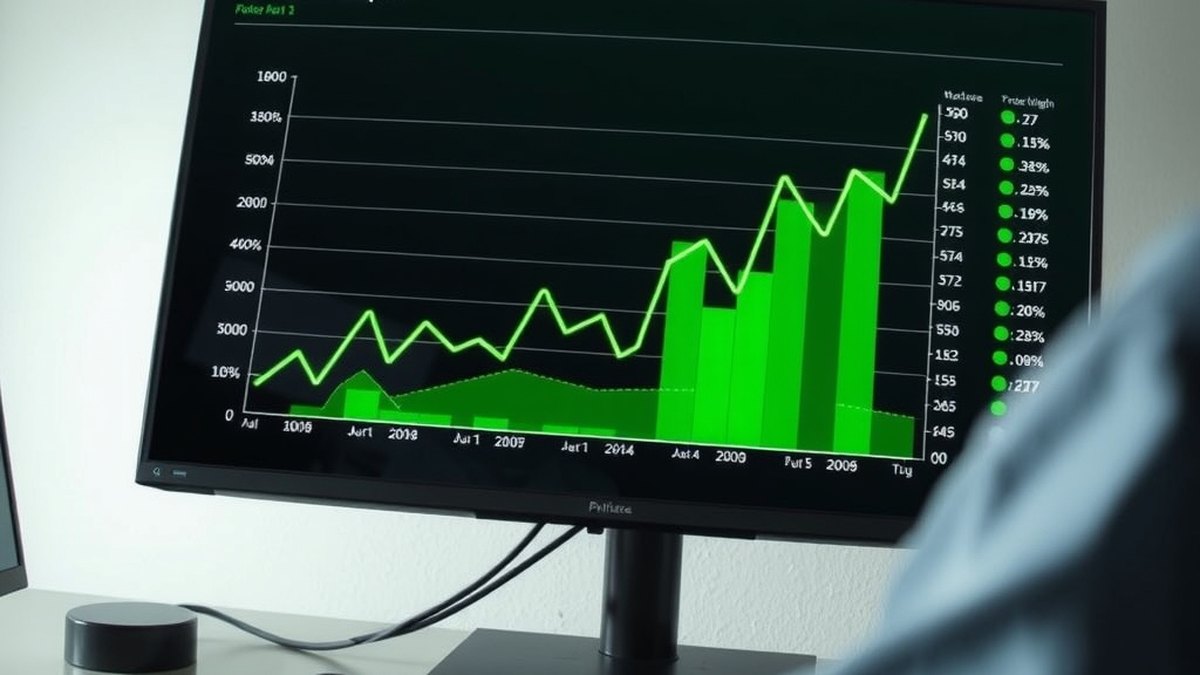
The acceleration of autonomous AI agents has become unmistakable: agents now generate 80% of all tokens processed on OpenRouter, the platform that routes queries across multiple AI models. In just nine months, agent-driven token consumption has grown 37 times faster than human-driven usage, marking a decisive shift in how AI infrastructure gets deployed. The finding, published by Menlo Ventures in its 2026 State of Enterprise AI Report on November 3, provides rare granular insight into the machinery behind AI spending.
OpenRouter, a model-agnostic gateway, is one of the best-available windows into real-world AI usage patterns. The platform now processes more than 160 trillion tokens weekly, a scale large enough to reflect broader industry trends, though its user base skews toward developers and smaller firms rather than large enterprises. That caveat aside, the 80% figure sends a stark signal: the era when humans sit down and chat with ChatGPT or Claude is no longer the dominant mode of AI compute consumption.
Why Agents Consume So Many Tokens
Autonomous agents don't just think once. They read, plan, check their work, and loop. An agent handling a customer-service task might retrieve multiple email threads, cross-check them against a help article, draft a response, review the draft against policy, and revise—each step consuming tokens. A single agent task often generates 5 to 10 times the token count of a single human query.
On top of that, prompt caching and prefills mean agents are rereading the same context repeatedly—a single company handbook or code repository—burning tokens for each fresh task. This architectural pattern makes sense for correctness but demands infrastructure at scale.
What This Means for Enterprise AI
Menlo Ventures found that enterprise AI spending hit $177 billion globally in 2026, up 5.4x from 2025. As agents account for the overwhelming bulk of that compute, the bill is no longer about chatbots or copilots—it is about autonomous systems that execute tasks, correct errors, and coordinate across multiple tools. Budget owners watching cloud bills now face a new reality: deploying an agent to handle a workflow is powerful, but it consumes radically more compute than a single model inference.
The token explosion also reveals a hidden truth about agent cost efficiency. Although agents burn tokens, many enterprises report that agent-driven automation handles more tasks, with fewer errors, than human workers. The economic question is whether the token cost justifies the output quality. Early data suggests it often does, but budget pressure on capex will soon test that calculus.
The Next Threshold
Agent token consumption on OpenRouter overtook human traffic for the first time in February 2026. Since then, the gap has only widened. Industry observers now watch whether agents will hit 90%, and how quickly. Some forecast that within a year, agents could account for 95% or more of token consumption on public platforms, simply because any automation that works at scale will be deployed at scale.
The shift also concentrates risk. If agents collectively consume most AI tokens, then agent safety, reliability and misalignment become the central concern for AI vendors and their customers. Every startup that built a copilot for human use faces a new era: those that can pivot to building agent systems will thrive; those that cannot may not survive.