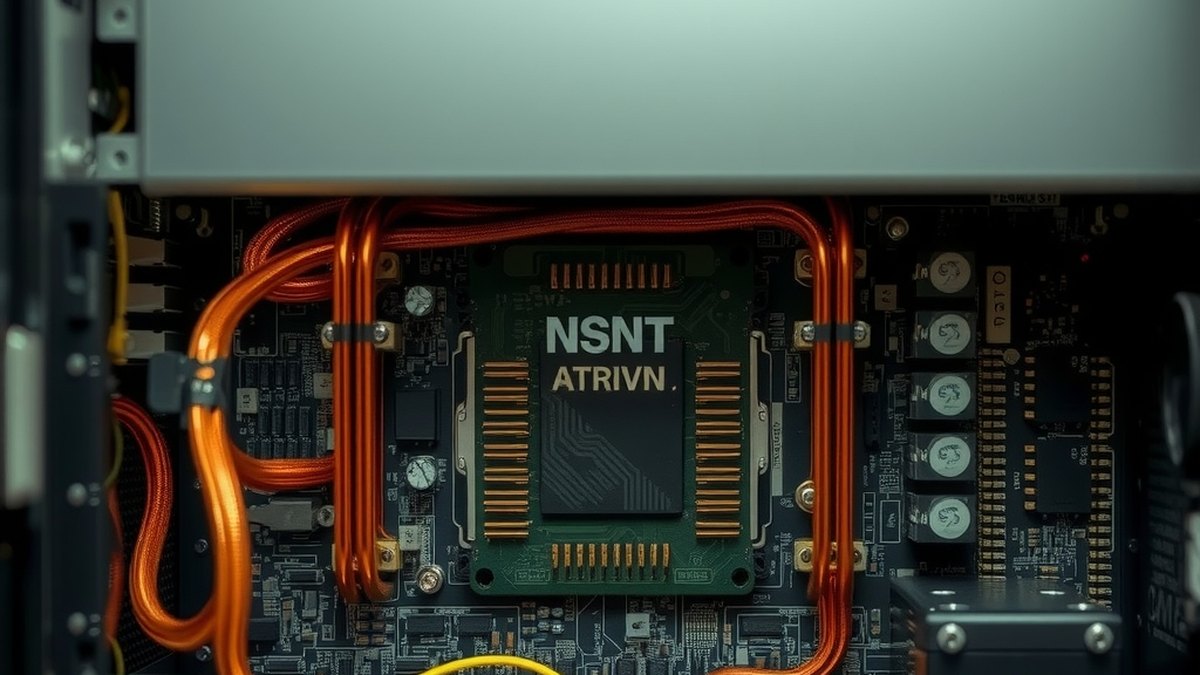
Google has added two chips to its eighth-generation Tensor Processing Unit family, the TPU 8tx and the TPU 8i Max, announced on November 9, 2026. The company is aiming them at two problems that now define frontier AI work: running models on sensitive data without exposing it, and handling the very long context windows that autonomous agents need. It is the first time Google has introduced four TPU systems in a single year, after the 8t and 8i chips in April.
Two Chips for Two Jobs
The TPU 8tx is built for confidential inference. Google says it uses the same silicon as the TPU 8t, but pairs it with fifth-generation AMD EPYC CPU hosts and adds hardware-level confidential computing. The goal is to keep sensitive data and model weights isolated while they are in active use, which is the constraint that has kept many regulated companies and governments from running frontier models on their most valuable records.
Google says the 8tx also lets teams fine-tune a model, distill it, and train agents with reinforcement learning on one system, without moving sensitive data between separate clusters. The company also claims up to twice the latency improvement compared with the TPU 8t, because it borrows the low-latency networking design from the 8i.
The TPU 8i Max takes a different route. It combines two TPU 8i chips into a single package, and Google claims it doubles the compute, on-chip SRAM, and high-bandwidth memory bandwidth of the TPU 8i. Google positions it for massive context windows and the highest compute density per rack, and says it fits twice the silicon into the same rack footprint.
Google frames the 8i Max around memory bandwidth bottlenecks for multi-agent and long-context workloads, which is why the doubling of SRAM and bandwidth is central to the pitch. Google has also said it developed the 8i Max alongside its push toward context windows of one million tokens, which gives a sense of the scale of workload it has in mind.
The Agentic Rationale
Google ties both chips to agentic AI. Agents that work through long documents, months of history, or large codebases need models that can hold a great deal of context at once. They also need to run continuously on private data. Larger context windows and more on-chip memory reduce the amount of data that has to move between chips, which Google says lowers both latency and power use.
That matters because agents tend to be expensive in a way that single chatbot replies are not. A single agent task can involve dozens of model calls, tool results, and intermediate reasoning steps. Hardware that keeps more of that work on-chip can make long-running agents more practical to run at scale.
What Google Has Not Said
Google's announcement does not include public pricing, detailed regional availability, or a full rollout schedule for either chip. It also does not provide independent benchmarks, so the performance claims should be treated as the company's own figures until third parties test the hardware.
Google's claims are relative to the TPU 8i rather than absolute capacity figures, so buyers will need the actual memory and rack numbers before planning deployments. That is a meaningful detail for workloads that depend on large model weights staying close to the processor.
What Customers Should Ask
Buyers evaluating the new systems will want answers to several questions that the announcement leaves open:
- How do real workloads perform against the claimed doubling of compute and memory bandwidth?
- What does confidential computing cost in latency and price compared with standard inference?
- Which regions and compliance certifications will be available for regulated customers?
- How easily can existing models and agent frameworks move onto the new hardware?
Until Google or independent testers answer those points, the chips are best read as a statement of direction rather than a finished product story.
Why It Matters
The two chips show how the infrastructure race is shifting. Earlier generations of accelerators were judged mainly on training speed. The new emphasis is on inference, confidentiality, and the memory needs of agents, which is where enterprise buyers are spending their attention.
For developers, the most useful signal is the security design of the 8tx. If confidential inference works as described, companies in finance, health care, and government may be able to run agents over data they previously kept out of cloud AI systems. For the broader market, it is another sign that chip designers now treat agents as a core workload rather than an afterthought.