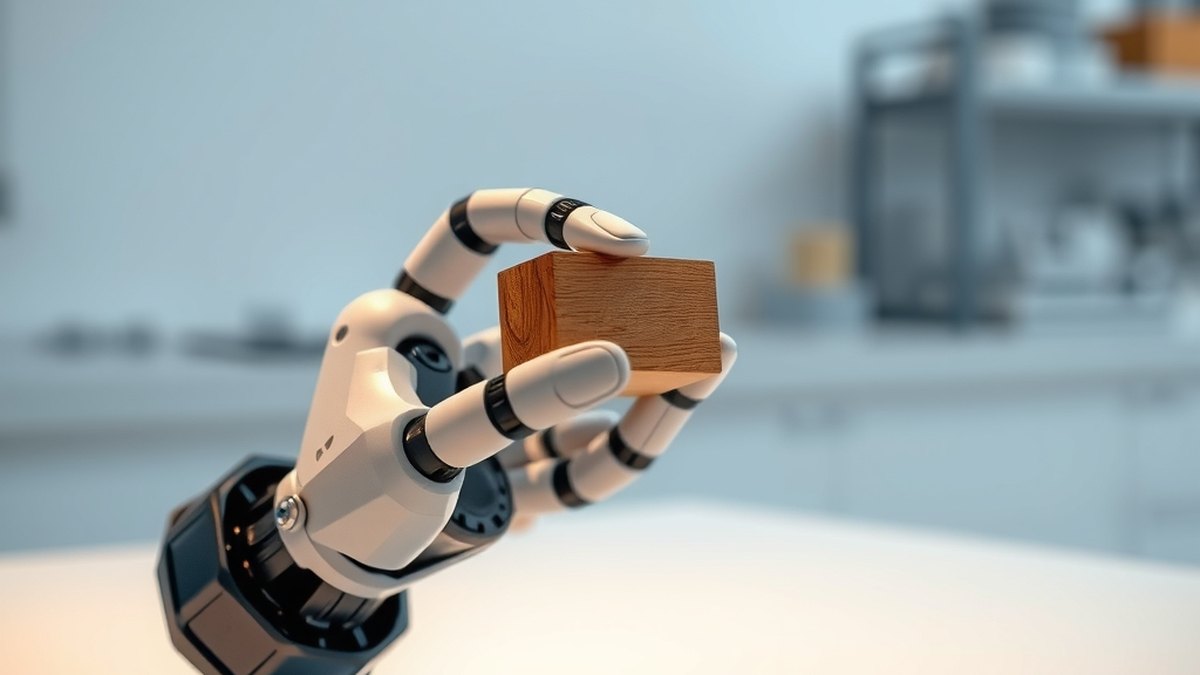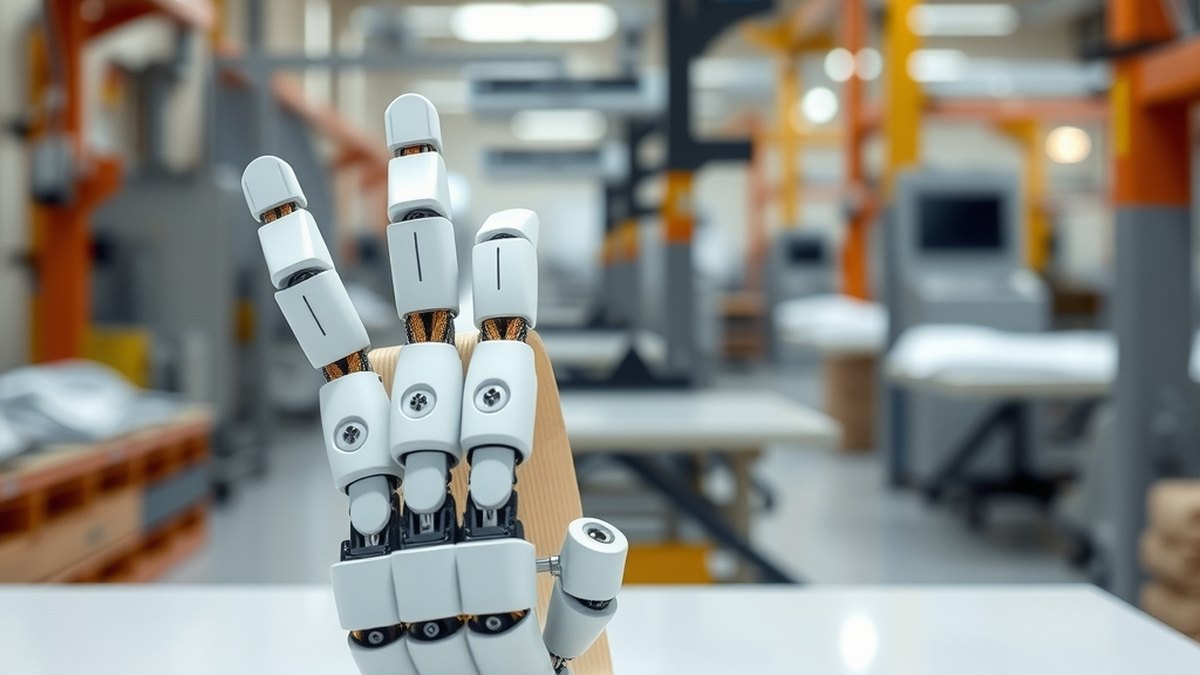
Google DeepMind has introduced Gemini Robotics 2.5, an updated vision-language-action model that the company says is approaching human-level performance on some real-world robotic tasks. The release puts new dexterity on display, including a demonstration in which Apptronik's Apollo 2 humanoid tied a bow with five-fingered hands. The model is rolling out through DeepMind's robotics partners, and it is aimed squarely at factory and industrial work.
What Changed in Gemini Robotics 2.5
A vision-language-action model reads camera input and language instructions, then produces motor commands. DeepMind describes Gemini Robotics 2.5 as its most capable model of this type so far. The company says it draws on capabilities from Gemini 4 Argon, its frontier language model, which rolled out in late September. The update performs better on tasks that need a high degree of dexterity, including handling delicate or flexible objects, which have long been difficult for robots.
The team tested the model across more than 200 distinct tasks, ranging from serving food with tongs to using a pipette. That breadth matters because a robot that performs well on one scripted task often fails when the object, lighting or sequence changes. DeepMind's claim is that the model generalizes across those variations, though outside evaluators have not yet published independent results.
The system also includes Gemini Embodied Reasoning, a vision-language component that uses instructions and live video to plan how a robot should complete a task. Dataconomy describes the platform as having several computational layers between a user's instruction and a robot's movement, which is a useful way to think about where failures can occur.
Factory Tests at Mercedes-Benz
The most concrete industrial figure comes from proof-of-concept tests at Mercedes-Benz, where the model packed automotive parts with a 96 percent success rate. Google also reports evaluations showing success rates ranging from 30 to 100 percent depending on the task, with tasks finishing 20 to 30 percent faster than with the previous version.
That range is wide, and the company has not published the full protocol for each test. Still, the spread is the most informative part of the data. Some tasks are close to reliable, while others remain uneven. Plant managers evaluating such systems will care less about the best-case number and more about how often the robot fails on the parts that are hardest to grip.
Hardware and Partners
Gemini Robotics 2.5 works natively with several robot types. Apptronik's Apollo 2 humanoid is one, and the Franka Duo platform, which uses two-fingered parallel grippers, is another. The rollout runs through DeepMind's robotics partners, which include Agile Robots SE, Apptronik and Boston Dynamics.
Apptronik co-founder and CEO Jeff Cardenas framed the goal plainly: "This is what we built Apollo for: useful work alongside people in real industrial settings." That statement reflects the direction of the industry, where humanoid makers increasingly want shared AI models rather than building every behavior from scratch.
Safety Work Near People
Robots that work near people raise a different set of concerns than robots caged behind fences. Google says it has improved physical steerability and introduced a new benchmark for testing against jailbreaks. Dataconomy reports the company is preparing for robots to work near people using an open-source safety benchmark called ASIMOV-jailbreak.
Such benchmarks test whether a model can be pushed into unsafe physical actions through adversarial prompts. They do not replace on-site safety engineering, such as force limits, zones and emergency stops. But they give developers a shared yardstick for comparing models, which is a necessary step before robots are trusted in shared spaces.
Why It Matters
Industrial robots have long been limited less by hardware than by the difficulty of general manipulation. A model that handles deformable objects, follows natural-language instructions and transfers across robot bodies lowers the cost of teaching each new task. That is the economic argument behind the entire category, and it is why Google's release is being watched closely by humanoid makers.
For factory buyers, the open question is whether a 96 percent success rate in a pilot holds across shifts, lighting changes and product variations. Pilots are where promising numbers are born, and production is where they are tested. The next signal to watch is whether Mercedes-Benz or the named partners publish longer deployment results.