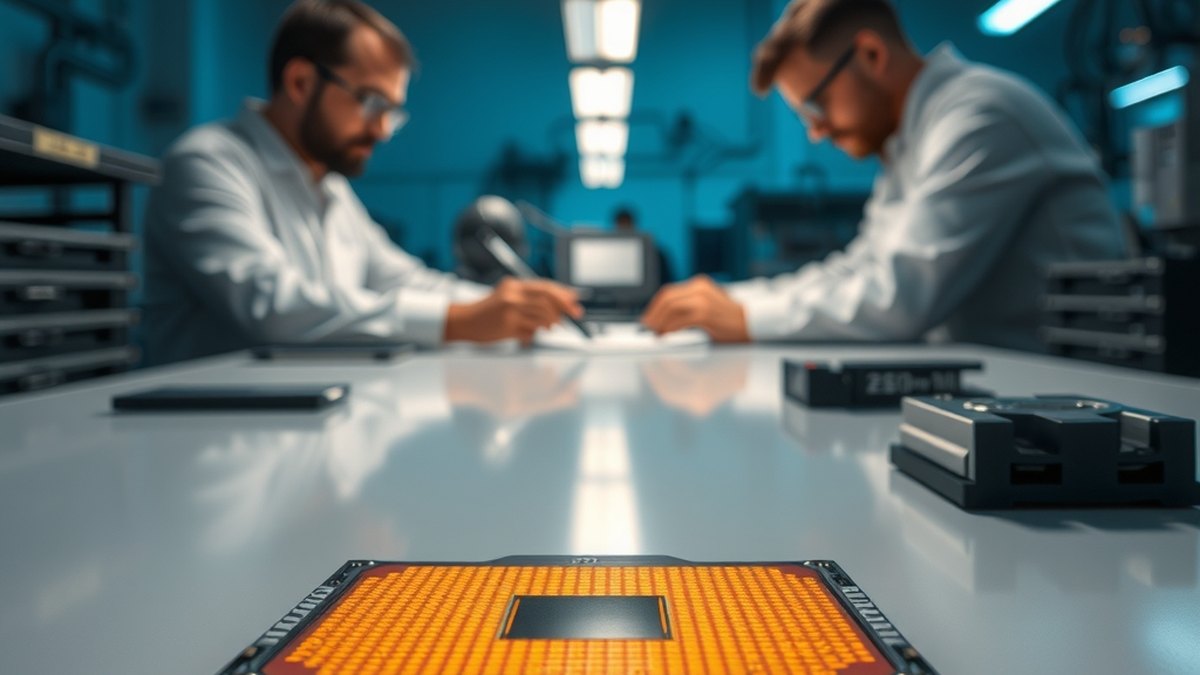
Axelera AI, a Dutch maker of AI chips, is reportedly in talks to raise about $400 million in new funding. A Bloomberg report published on November 24, 2026 cites people familiar with the matter, and the company is also pursuing several hundred million euros in grants from the European Union. If the round closes, it would be the largest raise in Axelera's history, and a sign that European investors still see room for challengers in AI silicon.
The Deal Under Discussion
The talks are at an early stage. Neither the reporting nor the available coverage gives a valuation, and no lead investor has been named for the new money. The Bloomberg account relies on anonymous sources, and nothing in the coverage indicates that Axelera has publicly confirmed the talks. Until a term sheet or company statement appears, the $400 million figure should be treated as a reported target rather than a closed deal.
Funding History and Grants
Axelera's previous major round came in February 2026, when it announced more than $250 million in new funding led by Innovation Industries. BlackRock and SiteGround Capital were named as new investors in that round. Total funding, counting equity, grants, and venture debt, now exceeds $450 million. Before that, the company had secured 61.6 million euros, roughly $67.4 million, to develop an AI chiplet, according to Analytics Insight.
The company is also seeking support through the EU's Important Projects of Common European Interest (IPCEI) programme. The grant amount is described as several hundred million euros. Like the equity talks, that request is a pursuit rather than a confirmed award.
Product Timeline and Customers
Axelera's third-generation architecture, called Titania, is central to the pitch. According to the company, Titania has more than $300 million in confirmed customer commitments, and production is targeted for the third quarter of 2027. Customer commitments are not the same as firm purchase orders, so the figure is best read as a sign of demand rather than guaranteed revenue.
The timeline also explains why the company needs capital. A chip designed for production more than a year from now must fund engineering, tape-out, and manufacturing preparation before revenue arrives. That gap is typical for hardware startups and explains why they often combine venture equity, public grants, and debt.
Why It Matters
Nvidia dominates much of the AI accelerator market, and that dominance has pushed governments and startups to look for alternatives. Axelera's talks fit a wider push in Europe for domestic chip capacity, where public subsidies sit alongside private capital. A large round would give the company room to compete on inference hardware, though it would still face entrenched rivals with deep software ecosystems.
For investors, the structure of the deal may matter as much as its size. A mix of equity, EU grants, and debt spreads risk across several parties, but it also means that the timing of each source affects the company's roadmap. If the IPCEI support arrives on schedule, the company gains flexibility. If it does not, the equity raise carries more weight.
Competing for Inference Workloads
Axelera's pitch centers on the Titania architecture and on the part of the market where chips run trained models rather than train them. Inference hardware is judged on cost per query, power draw, and how easily a customer can deploy existing models. A smaller company can win ground there by focusing on a narrower set of efficiency targets, but it must still persuade buyers that its software tools will work with the frameworks their engineers already use.
That is where the $300 million in customer commitments carries weight. Commitments from buyers signal that the product has moved past the pitch stage, even though they do not guarantee revenue. Converting those commitments into shipments on the third-quarter 2027 timeline will be the real test of whether the company can execute on hardware schedules, which are notoriously unforgiving.
Reading the Numbers Carefully
Headline figures in funding reports can mislead, so it helps to separate the layers. The $400 million is a target from talks, not a signed commitment. The EU grant request is a separate track, and its outcome depends on a public approval process rather than on investors. The $300 million in customer commitments is a company statement, and it reflects intent to buy rather than delivered orders. Each layer carries a different level of certainty, and readers should weigh them separately.
The total funding figure also needs context. Adding equity, grants, and venture debt produces a larger number than equity alone, and combining the three types can overstate how much cash is available for operations on any given date. Venture debt carries repayment terms, and grants often arrive in tranches tied to milestones. A company reporting cumulative funding is describing capital raised, not capital spent or still in hand.
What to Watch
- Whether the round is confirmed by the company, and at what valuation.
- Which investors lead the new round.
- Whether the IPCEI grant request moves forward.
- Whether Titania reaches production in the third quarter of 2027, as planned.