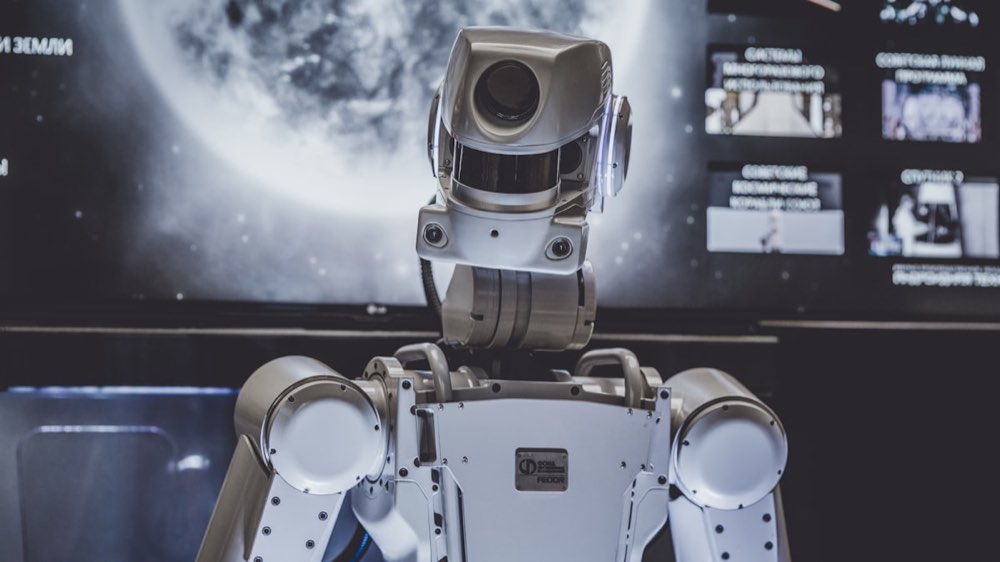
Microsoft has crossed a threshold it spent two years approaching: its Copilot assistant is no longer a chat box bolted onto Word and Excel, but an autonomous agent that can plan, execute and return finished work across Microsoft 365. In a wave of more than 40 updates rolled out through July 2026, the company made two changes that reset the competitive map — users can now select Anthropic's Claude models directly inside Copilot Chat, and Copilot Cowork can independently carry out multi-step tasks with only occasional human check-ins.
From Chatbot to Digital Colleague
For most of Copilot's history, the product was synonymous with OpenAI models and chat-first productivity. That framing is over. Copilot Cowork, first announced in March 2026 and now broadly live, is positioned as a permissioned coworker that gathers data from SharePoint, drafts a memo in Word, formats figures in Excel and queues the result in Teams — checking in only at key decision points rather than after every prompt.
The engine behind that autonomy is a deliberate multi-model strategy. Microsoft built Cowork in close technical collaboration with Anthropic, drawing on Claude's agent architecture for planning and execution while keeping GPT-class models available for other tasks. The move mirrors Anthropic's own Claude Cowork, an enterprise agent mode marketed as "Claude Code without the code" for knowledge workers who need multi-step automation, file access and app control without touching a terminal.
Underpinning it all is a memory layer Microsoft calls Work IQ, which grounds agents in a tenant's actual data so that a task like "prepare the quarterly board pack" can be decomposed, researched across apps and assembled without the user re-explaining context at each step.
Governance Arrives With Agent 365
Autonomy without control is a liability, and Microsoft paired the Cowork rollout with Agent 365, a centralized governance and lifecycle platform for enterprise agents. It gives IT teams the ability to provision, monitor, audit and revoke agents at scale, layering identity, access controls, policy enforcement and observability over every agent action.
In practice, administrators now face a new class of responsibilities:
- Model access management — deciding which teams can invoke Claude, GPT or other models.
- Spending limits — capping token and compute costs before autonomous agents run up bills.
- Permission auditing — tracking what data an agent can read and which actions it can take.
That control plane matters because agentic systems fail differently from chatbots. A chatbot that hallucinates produces a bad sentence; an agent that misfires can send the wrong email, overwrite a file or trigger a workflow. Agent 365 is Microsoft's answer to the question every enterprise is now asking: how do you let software act on your behalf without losing the audit trail?
Why It Matters
The significance is not that Microsoft added a model — it is that the two largest enterprise-software distributions on earth, Microsoft 365 and Anthropic's Claude, are now interlocking. For years the assumption was that Microsoft's AI destiny ran exclusively through its OpenAI partnership. Letting customers pick Claude inside Copilot Chat, and building Cowork's reasoning on Claude, signals a decisive shift toward model plurality — enterprises choosing the best engine per task rather than accepting a single default.
It also reflects an industry-wide pivot. All three major AI platforms are making the same move: from chatbots that answer questions to agents that execute tasks. OpenAI restructured ChatGPT around autonomous agents earlier in 2026, and Anthropic's Cowork is built expressly for agentic professional workflows. Microsoft's advantage is distribution — Copilot reaches hundreds of millions of seats already embedded in daily work.
For IT leaders, the update forces a strategic reckoning. The question is no longer whether to deploy agents but how to govern them. The organizations that win will be those that treat agents like employees — with scoped permissions, spending controls and clear accountability — rather than like features to be switched on and forgotten.
The Road Ahead
Expect the next phase to center on interoperability and trust. As agents proliferate across Microsoft 365, the emerging standards that let them talk to external tools — the Model Context Protocol chief among them — will determine how far Cowork's reach extends beyond Microsoft's own walls. And as agents take on higher-stakes work, the pressure on Agent 365's observability and override mechanisms will only grow.
Microsoft's bet is that the future of work is not a smarter chatbot but a fleet of governed, autonomous colleagues doing the parts of knowledge work that used to eat entire afternoons. With Claude now under the hood and Agent 365 watching over the top, that future arrived in enterprises this month — whether IT was ready or not.