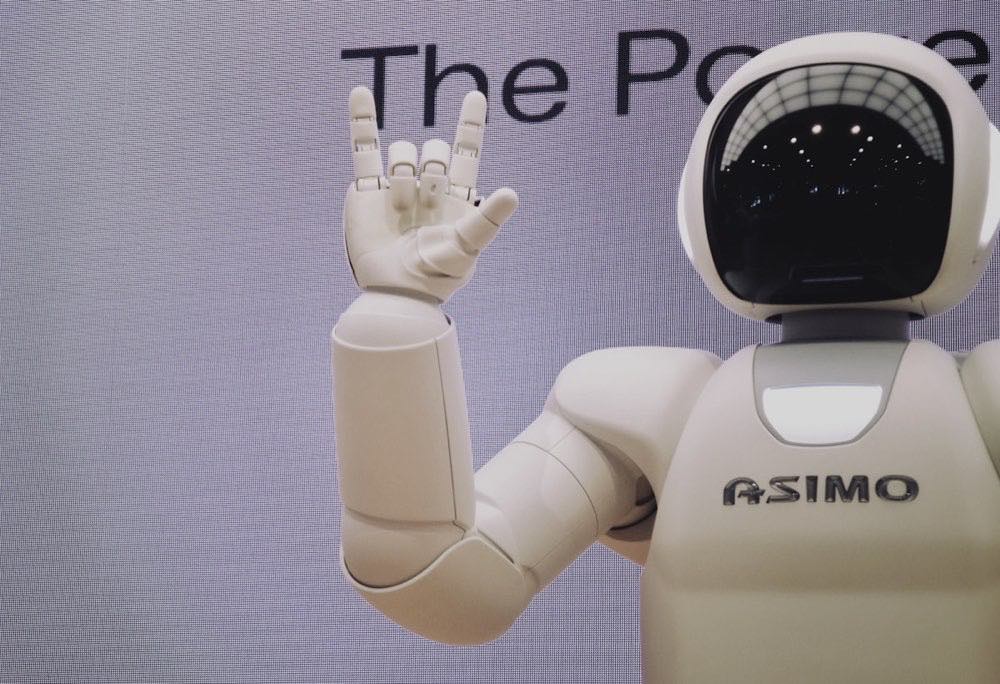
The world's factories crossed a symbolic line in 2025: five million industrial robots are now at work, according to the International Federation of Robotics (IFR), which published its annual World Robotics 2026 report on September 24. The data shows automation accelerating again after a flat stretch, with China installing more robots than the rest of the world combined and the United States overtaking Japan for second place.
A Record Year for Installations
The IFR says the global operational stock of industrial robots rose 9% to a record 5 million units in 2025. The driver was an 11% jump in annual installations, with factories adding more than 600,000 new robots over the year.
IFR president Jane Heffner noted that the five-million mark is more than double the installed base of seven years ago, with the strongest growth in Asia, followed by the Americas, while Europe is moving more slowly.
The Top Markets of 2025
The country rankings tell a story of concentration:
- China: 354,000 installations, up 20%, equal to 59% of all deployments worldwide.
- United States: roughly 38,500 installations, up 12%, climbing past Japan into second place.
- Japan: 36,219 installations, down 19%, slipping to third.
- South Korea: about 30,000 installations, down 1%, holding fourth.
- Germany: fewer than 25,000 installations, down 8%, fifth globally and first in Europe.
- India: nearly 10,500 installations, up 15%, now sixth in the world.
China's figure is striking not only for its size but for its growth rate. After several years in which domestic demand appeared to plateau, Chinese manufacturers returned to heavy automation spending in 2025, supported by electronics, automotive and battery production and by a fast-maturing domestic robot supply chain.
The United States and India are the other notable movers. American installations grew 12% as manufacturers invested in reshored production and responded to persistent labour shortages, lifting the country above Japan for the first time in this ranking. India's 15% increase to nearly 10,500 units puts it firmly among the world's top six markets, a sign that its manufacturing push is starting to translate into automation spending.
Europe Loses Momentum
Europe is the weak spot. In a separate release, the IFR said the EU-27 passed 700,000 operational industrial robots in 2025, accounting for 84% of the region's installed base. But annual installations fell across most major economies: Italy dropped 11% to about 7,800 units, France fell 8% to nearly 4,500, and Spain declined 15% to about 4,300. Germany, the continent's anchor market, was down 8%.
The pattern reflects soft industrial demand, high energy costs and cautious capital spending among European manufacturers, especially in the automotive sector as it navigates the transition to electric vehicles.
What Comes Next: 806,000 Units by 2029
The IFR expects the upswing to continue. It forecasts installations rising 9% to 655,000 units in 2026 and reaching 806,000 units in 2029.
The federation points to several forces behind demand:
- Capacity expansion as manufacturers reshore and diversify production.
- Labour shortages and demographic change in ageing industrial economies.
- Supply-chain resilience, pushing firms to automate regional plants.
- AI, machine vision and sensing advances that widen the range of tasks robots can handle.
- Simpler programming and integration, which lowers the barrier for smaller manufacturers.
The IFR also highlighted professional service robots, saying they are moving from niche uses into everyday operations as organisations look for help with staffing gaps and rising service demand.
Why It Matters
The headline number is industrial arms, not humanoids, but the report provides the most reliable baseline for the wider robotics boom. While humanoid makers attract investor attention with demos and pilot deployments, conventional robots remain the backbone of factory automation, and their installed base now sits at five million units.
Three implications stand out:
- China's scale advantage is compounding. Deploying 59% of the world's new robots gives Chinese manufacturers, and the robot makers supplying them, a data and cost lead that will carry into AI-driven and humanoid robotics.
- The US is recovering ground. Rising above Japan suggests reshoring policy and tighter labour markets are translating into real automation spending.
- Europe risks falling behind. Declines across Germany, Italy, France and Spain come at a moment when AI is making robots more capable and easier to deploy.
For companies weighing automation investments, the report is a clear signal: the robot market is growing again, and the gap between leaders and laggards is widening.