Boston Dynamics has picked an AI executive, not a roboticist, to lead its next chapter. The Hyundai-owned company named Rohit Prasad, the former Amazon senior vice president and head scientist for Alexa and artificial general intelligence, as chief executive effective October 7, 2026. The appointment is the clearest sign yet that the maker of Atlas and Spot sees physical AI, the fusion of large-scale machine learning with robot hardware, as the route to commercial scale.
A Third CEO in 34 Years
Prasad becomes only the third permanent CEO in the company's history. Founder Marc Raibert ran Boston Dynamics from 1992 until 2020, when Robert Playter took over. Playter departed in February 2026, and chief financial officer Amanda McMaster has served as interim CEO since then. Prasad is also expected to join the board of directors, subject to the relevant approvals, according to the company.
In its announcement, Boston Dynamics said the hire accelerates its physical AI strategy by combining robotics with advanced AI capabilities to commercialise intelligent machines at scale. Prasad said that bringing advanced AI and robotics together can produce systems that create meaningful value in real-world settings.
From Alexa to Atlas
Prasad's résumé is built on turning research into mass-market AI products:
- Amazon (12 years): He helped build Alexa from its earliest days into a consumer AI service used in hundreds of millions of households, and more recently led development of the Amazon Nova foundation model family for enterprise customers. He left Amazon at the end of 2025.
- Raytheon BBN Technologies (nearly 14 years): He led machine-learning research and applied it to projects for the US government and commercial clients.
- Education: He holds a master's degree in electrical engineering from the Illinois Institute of Technology and a bachelor's in electronics and communications engineering from the Birla Institute of Technology in India.
Hyundai Motor Group vice chair Jaehoon Chang, who chairs the Boston Dynamics board, said Prasad's proven ability to turn AI into products at global scale, combined with Hyundai's manufacturing and logistics muscle, gives the company a strong foundation to build and scale physical AI.
The Atlas Production Push
Prasad inherits a company in the middle of its most ambitious commercial ramp. Gizmodo reports that Boston Dynamics has told investors it plans to build 30,000 humanoid robots by 2028, with about 25,000 destined for Hyundai and Kia car plants and roughly 5,000 sold as retail products. The company has opened a Robotics Metaplant Application Center in Georgia to integrate Atlas into Hyundai's automotive manufacturing, according to The Robot Report.
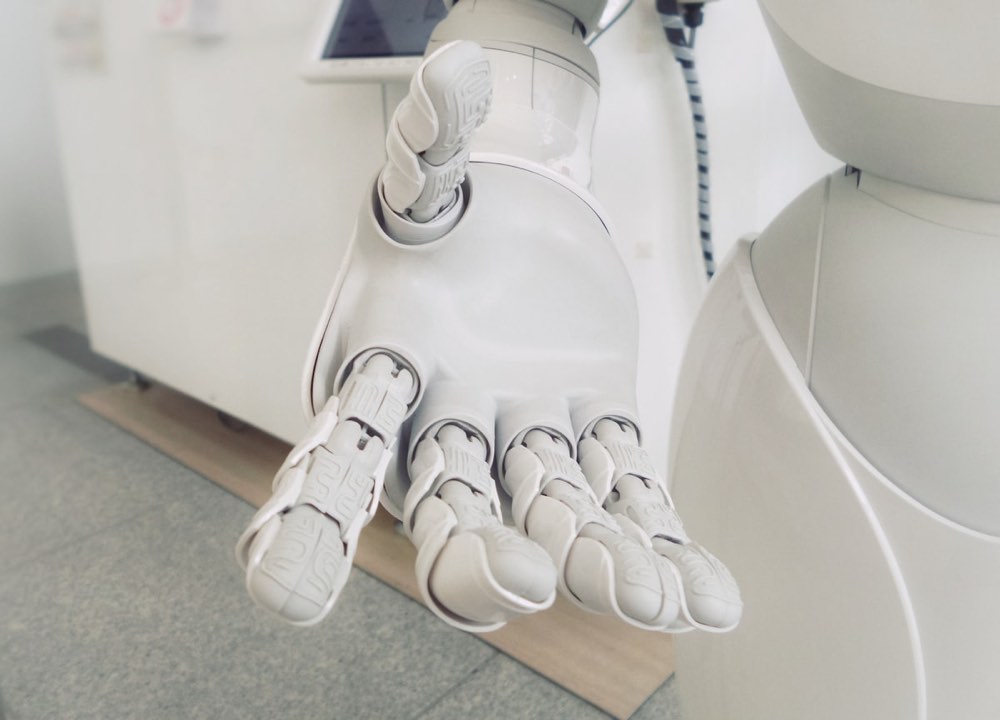
Recent engineering milestones point in the same direction. Boston Dynamics recently unveiled a four-fingered humanoid hand designed for high-fidelity simulation so that manipulation skills can be learned through reinforcement learning. Its Atlas program is paired with Google DeepMind's Gemini Robotics models for perception, reasoning and tool use, while the Spot quadruped's 5.2 software release adds agentic workflows and the Orbit inspection platform now uses Gemini as well.
Why It Matters
The appointment captures a wider shift in the humanoid robot industry. For decades, Boston Dynamics was defined by spectacular control engineering: robots that ran, jumped and danced. The competitive frontier has since moved to software, specifically foundation models that let robots understand instructions, generalise across tasks and learn from data rather than hand-tuned code. Rivals such as Tesla with Optimus, Figure, Agility and a fast-growing cohort of Chinese manufacturers are all racing on that axis.
Putting a leader who scaled Alexa and built Amazon's Nova models in the top job signals that Boston Dynamics intends to compete on AI and productisation, not just mechanics. It also matters for Hyundai, which needs thousands of reliable robots on factory floors to justify its investment since acquiring a controlling stake in 2021. Industry forecasts underline the opportunity: TrendForce expects global humanoid shipments to pass 50,000 units in 2026, a dramatic jump from the year before.
The challenge is execution. Moving from a few hundred prototypes to tens of thousands of production robots requires supply-chain discipline, safety certification and data pipelines at a scale Boston Dynamics has never operated. Prasad's experience shipping consumer devices and cloud AI at Amazon will be tested in a world where failures are physical, not just conversational.
What Comes Next
Expect Boston Dynamics to emphasise data-driven learning, deeper integration with frontier model partners and measurable factory deployments in the months ahead. Key indicators will be how many Atlas units reach Hyundai lines in 2027, whether the company announces new AI partnerships or in-house model work under Prasad, and how quickly retail Atlas sales materialise against that 5,000-unit target.