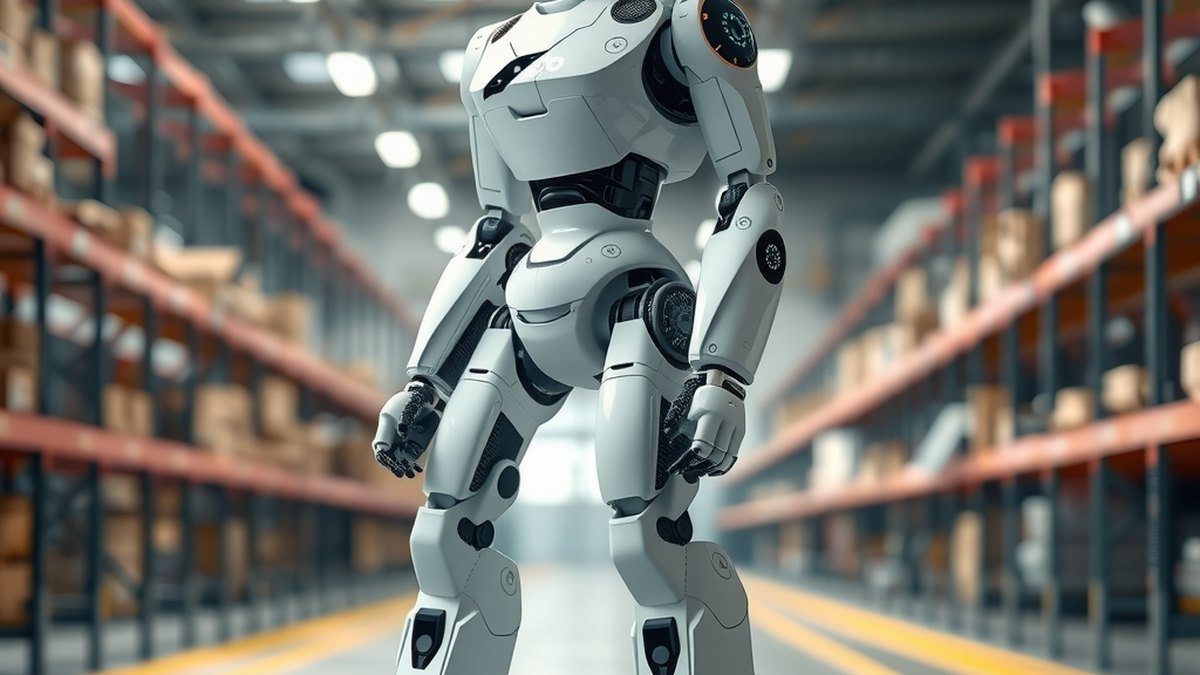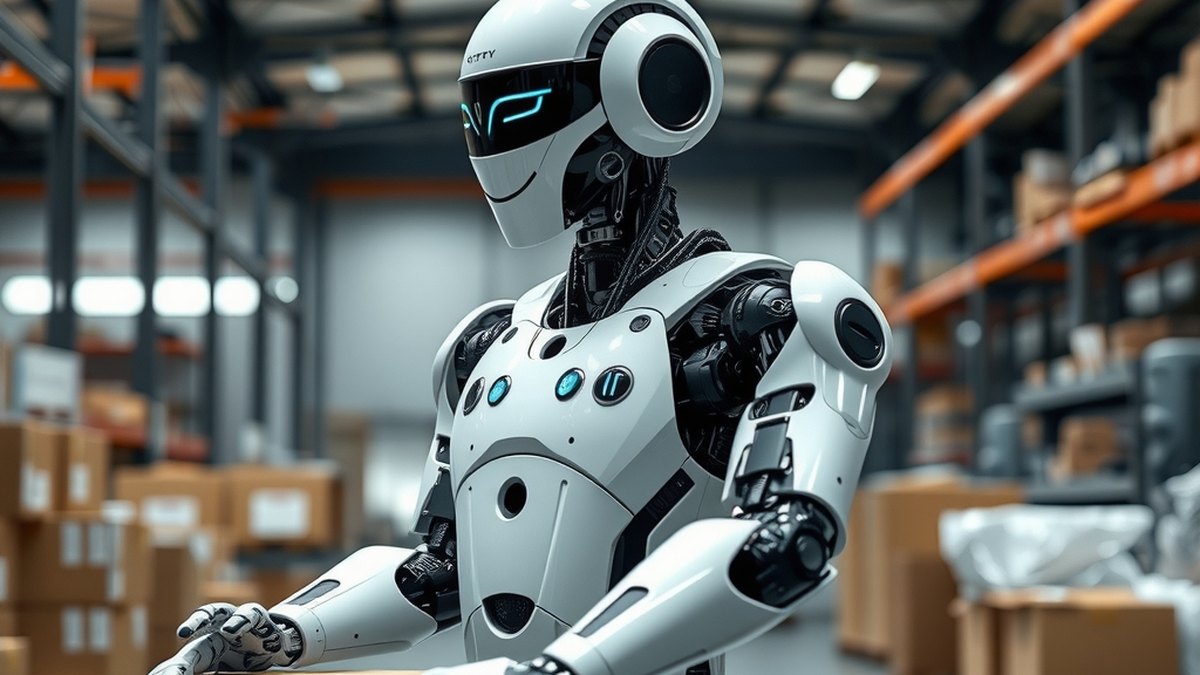
St. Clair College officially unveiled Clairion, a humanoid robot designed to help students explore emerging technologies while testing practical applications in manufacturing and logistics. The Unitree R1 robot, which cost approximately $30,000, signals growing interest in humanoid robotics among Canadian educational institutions and their potential for addressing labor-intensive industrial tasks.
What is Clairion?
Clairion stands for "Cognitive Learning Artificial Intelligence Robotic Innovation and Operations Network." The robot was selected through a two-month naming competition that received approximately 200 student submissions, with first-year protection, security and investigation student Mohammad Alkhateb winning the contest. Alkhateb's winning entry explained that Clairion "perfectly bridges with St. Clair College," connecting the institution's name with advances in AI and robotics.
The Unitree R1 platform on which Clairion is based has become a popular choice in research institutions seeking accessible humanoid robotics for educational and experimental applications. At $30,000, it sits in the mid-range of humanoid robot pricing, making it more accessible than Tesla's Optimus or Boston Dynamics systems while still offering substantial capability for learning and industrial exploration.
Current Capabilities and Development
Currently, Clairion operates with pre-programmed scripts for communication, providing a foundation for more advanced capabilities. St. Clair College researchers are actively developing enhanced functionality that would enable Clairion to answer questions dynamically using information from the college's handbook and other institutional knowledge bases. This incremental approach to AI integration reflects broader patterns in robotics research, where systems begin with scripted behaviors and progressively add learning and reasoning.
The robot also has physical teleoperation capabilities, allowing human operators to guide it through tasks during development and refinement phases.
Industrial Applications Under Study
St. Clair College has already deployed Clairion to manufacturing facilities to explore real-world industrial use cases. The primary focus has been on repetitive handling tasks—moving boxes, stacking materials, and performing motions that pose ergonomic risks to human workers. Manufacturing environments present an ideal proving ground for humanoid robots because tasks are structured, spaces are controlled, and repetition is high.
The potential injury reduction alone justifies pilot programs in manufacturing. Repetitive strain injuries cost Canadian industry millions annually. If Clairion and similar platforms can reliably handle material handling without fatigue or ergonomic limitations, adoption could accelerate significantly. This mirrors how industrial robot arms (which have dominated factories for decades) succeeded by taking over tasks humans found dangerous or ergonomically damaging.
Why It Matters
The convergence of affordable humanoid robots, Canadian government research funding, and educational partnerships signals that humanoid robotics is transitioning from research curiosity to practical infrastructure. The $200,000 research grant from the Natural Sciences and Engineering Research Council of Canada (which funded Clairion's acquisition and associated research) represents a vote of confidence from government in the economic potential of humanoid robotics in Canada.
Educational institutions like St. Clair College serve as crucial testing grounds because they combine motivated researchers, access to manufacturing partners, and freedom to explore failure. When universities succeed in deploying robots for real work, those successes become reference cases that influence enterprise adoption decisions.
Clairion's focus on repetitive industrial tasks rather than autonomous general-purpose work reflects realistic near-term deployment strategies. Unlike autonomous systems aiming for general intelligence, specialized applications for specific task categories (material handling, inspection, assembly) are closer to commercialization and likely to see revenue sooner.
The Broader Context
Humanoid robot deployments are accelerating globally. Tesla's Optimus, Boston Dynamics' Atlas, and Chinese platforms like Fourier Intelligence's GR-1 are all being tested in manufacturing and logistics settings. What distinguishes the St. Clair College initiative is its focus on workforce transition and educational pipeline: by training students on these systems today, the college prepares them for a labor market where human-robot collaboration will be standard.
The college's openness about sharing learnings with the manufacturing sector also serves a public good—accelerating adoption of safety-enhancing technology across Canadian industry.