Nvidia has introduced GR00T 2, a robot foundation model that tries to cut the hours of manual teleoperation usually needed to teach a machine a new task. Announced around the CoRL 2026 robotics conference, the model learns from footage of people doing ordinary work and then adapts to a new robot body with only a few demonstrations. The release arrives as the industry races to make robots useful outside carefully controlled factory cells.
A World Action Model, Not Just a VLA
GR00T 2 is not a conventional vision-language-action model. Nvidia describes it as an open world action model, and the difference is important. The model predicts both the next movement a robot should make and a short video of what the immediate future will look like. That prediction is meant to let movement sequences carry over between different robot bodies.
Nvidia trained the model on about 400,000 hours of footage of people performing tasks while wearing head-mounted cameras. To teach a new task, a person demonstrates it using data gloves, grippers or a finger exoskeleton. The model then generates a robot arm inside its predicted video in place of the human arm and derives the matching control commands. The approach reduces dependence on robot-specific teleoperation data, which is expensive to collect.
What the Early Results Show
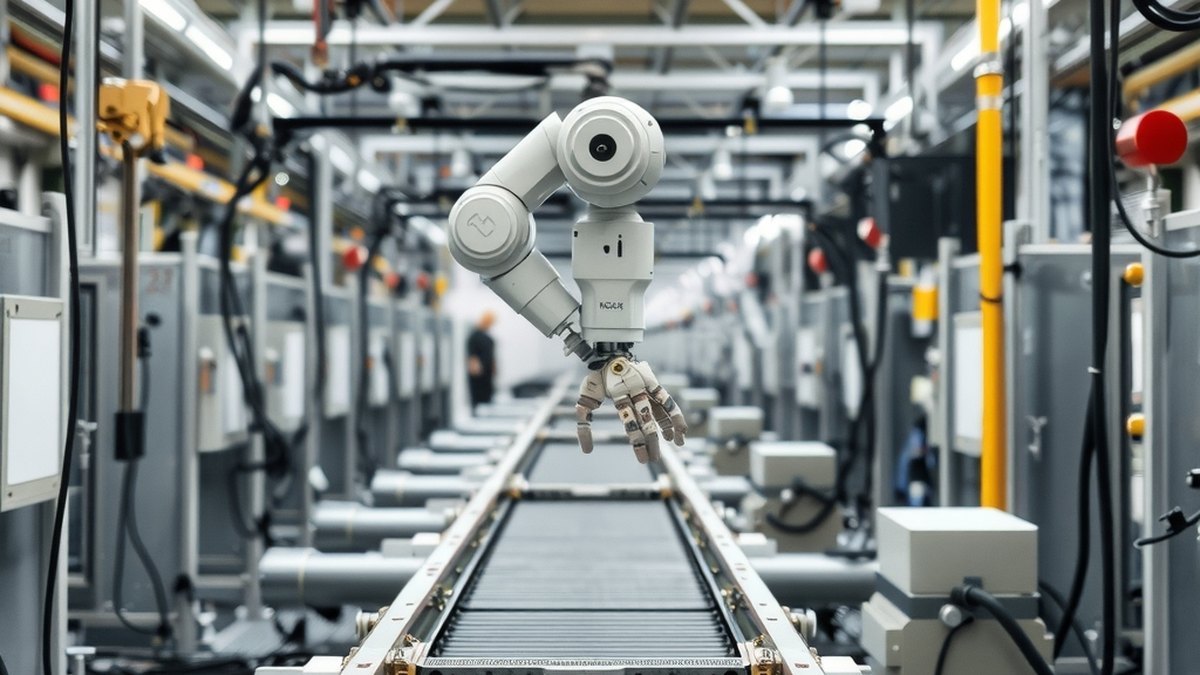
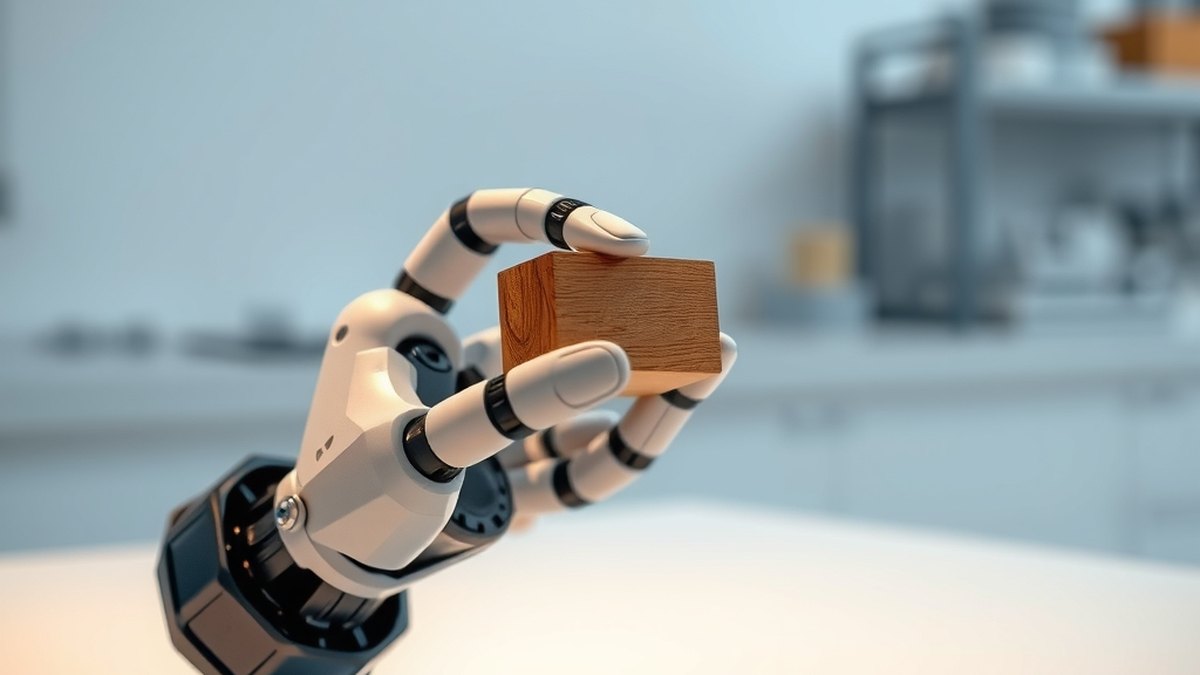
Reported results are encouraging but uneven. A five-fingered robot hand performed tasks such as lighting a match, slicing a banana and tossing packages onto a conveyor belt without teleoperation for those specific tasks. Success rates ranged from 10 percent to 80 percent depending on the task. In simulation, the system learned to hammer nails from a single human video.
On a set of 50 tasks, less than three minutes of conventional training raised average success from 40 percent to 95 percent, according to the coverage. The model also worked with a higher-level language model that handled errors. In that combined setup, the system assembled toy models in at least 97 percent of trials. Without the language model, a toy car assembly succeeded in 23 of 100 attempts.
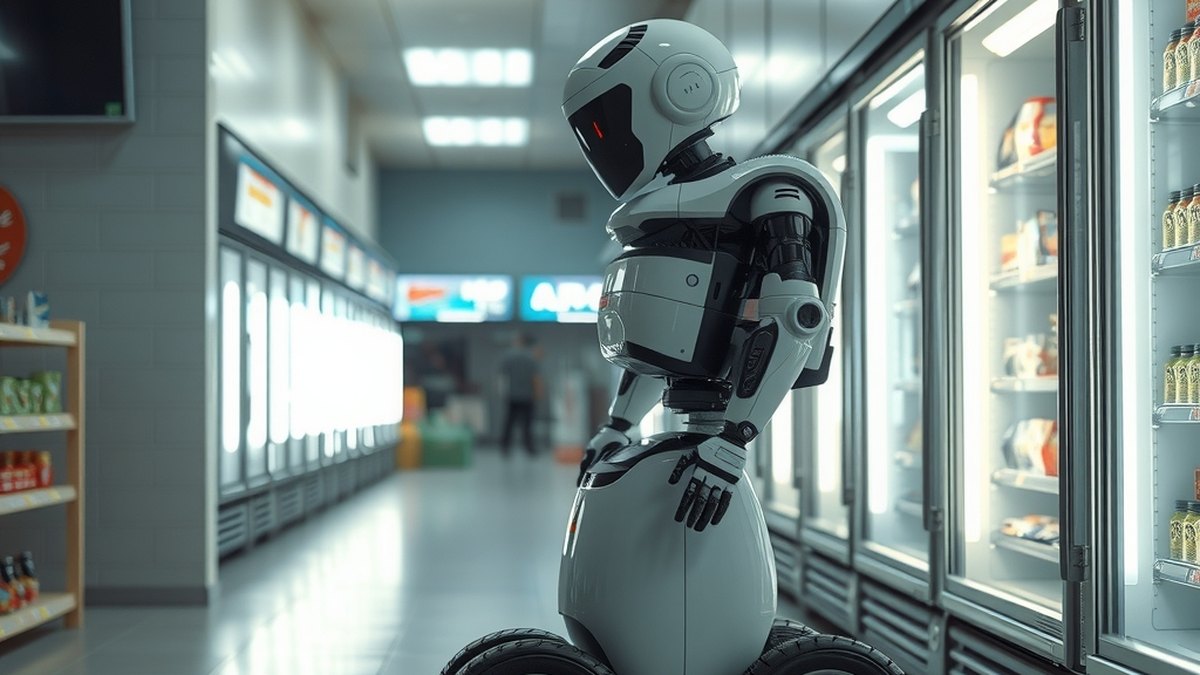
A slimmer variant, GR00T 2 Turbo, is designed for bipedal robots and runs on the onboard Jetson Thor computer. In one test, it wiped liquids with a towel successfully in just under half of attempts. Those numbers show that the approach is promising for physical work but still far from reliable in every setting.
Limitations That Matter
The reporting names several weaknesses. The system has no direct touch sensing, so it can miss subtle errors that a person would feel. It also sometimes fails to notice small mistakes in the middle of a task. The language model's response delays left one robot idle for about a third of the time during a trash-sorting test.
Those gaps point to a practical lesson for anyone building on the model. Latency between perception, planning and control can cost as much productivity as a lower success rate, so integration design matters as much as the base model.
Who Is Involved
Nvidia supplied the hardware in these tests, including GB300 chips and Jetson Thor modules. OpenAI's model, referred to in the reporting as GPT-6 Astra, served as the higher-level planning model in the toy assembly setup. The collaboration shows how frontier language models and robot foundation models are being combined, with each handling a different layer of the task.
Nvidia's developer announcement describes GR00T 2 as an open model for adapting to new tasks and robot bodies with a handful of demonstrations. It also says the model is part of a broader set of robot-learning releases for the conference, including Isaac Lab 3.0.
How to Read the Numbers
Robotics benchmarks are easy to misread, so the headline percentages deserve context. A 95 percent success rate across 50 tasks after under three minutes of conventional training is a strong result, but it measures tasks chosen by the developers, in controlled setups. The 10 to 80 percent range for dexterous tasks without task-specific teleoperation is closer to what a buyer might expect from a fresh deployment, and the low end would not be acceptable on a production line.
The comparison between the toy-assembly runs is the most instructive. A 23-in-100 result without a planning model versus at least 97 percent with one suggests the base policy is not the only lever. Error recovery and high-level reasoning can contribute as much as low-level motor skill, which favors systems that combine several models rather than relying on one.
Independent replication will be the real test. Because the model is described as open, outside labs should be able to check the claims on their own hardware, and the results will show whether the learning-from-video approach generalizes beyond the demonstrations Nvidia and its partners have shown so far.
Why It Matters
Robotics has long been constrained by data. Every new task has traditionally required new demonstrations on the exact machine that will perform it. If a model can learn from abundant human video and transfer that knowledge to different bodies, the cost of deploying a robot to a new job could fall sharply.
That is the bet behind GR00T 2. The results are not yet proof that a general-purpose household or factory robot is close, but they suggest that video-based world models are becoming a serious route to physical AI. Buyers should watch whether the claimed transfer holds up in messy, real-world environments rather than in curated demonstrations.