Tesla has filed for approval to acquire assets from EMAG, a German maker of gear-cutting and grinding machines, according to a competition listing that became public this week. The filing points toward Optimus, Tesla's humanoid robot, and it puts a long-running question in sharp focus: can Tesla secure the precision parts a humanoid needs at volume, and how much of that supply chain does it want to own?
What the Filing Shows
The Federal Cartel Office listed the case as B5-132/26, titled "Tesla / EMAG-Gruppe (Vermögenserwerb)," on November 23. The title signals an asset acquisition, which would mean Tesla takes over parts of EMAG's business rather than the whole company. The listing became public on November 27. EMAG is a private group based in Salach, near Stuttgart, that makes machines for cutting and grinding gear wheels.
The listing contains no price, staff numbers or unit counts. Neither company has commented, and the filing shows no decision yet. The Cartel Office has one month to clear a deal from a complete filing, or five months if it opens a deeper review. If the notification was complete on November 23, the first deadline would fall around December 23. Clearance would only mean the authority sees no competition concerns, not that the deal has been approved on any other basis.
Why Gears Matter for Humanoids
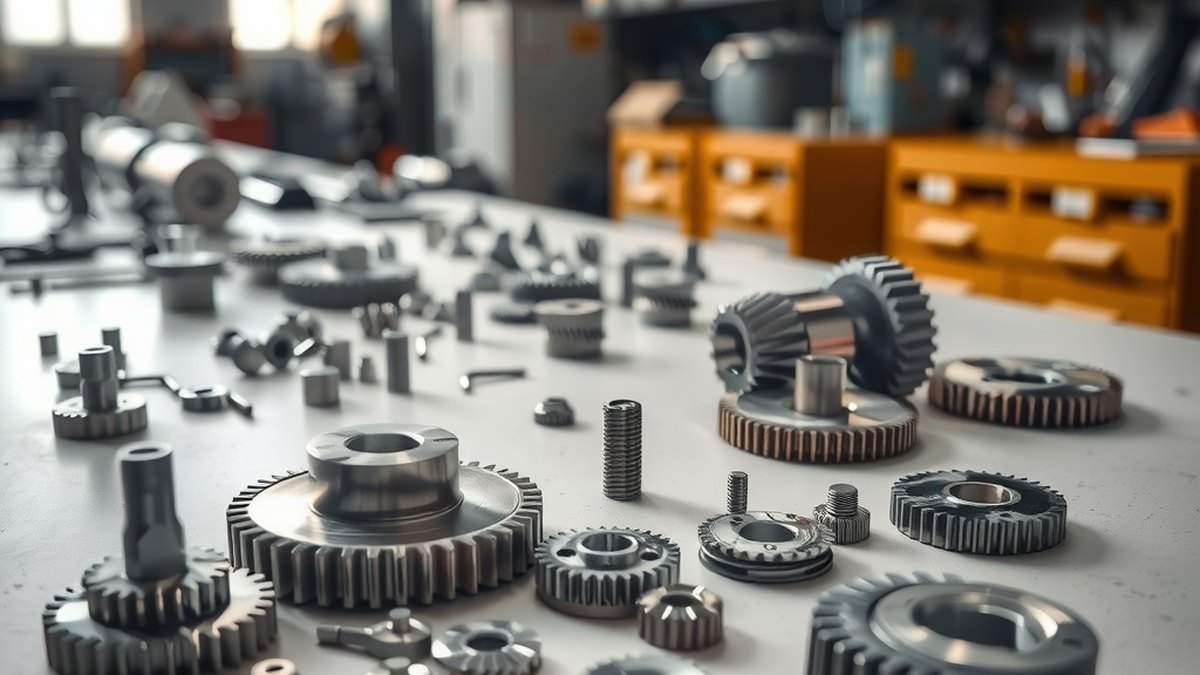
Reports tie the filing to Optimus. The logic is that a humanoid robot depends on many precision actuators and gears, and that owning gear-cutting capacity would let Tesla control cost and volume for those parts, much as it has pursued control over battery cells. EMAG's website says a humanoid robot needs at least 14 rotary actuators. That illustrates how many precision drive components a single robot requires, although it does not show how Tesla plans to source them.
Tesla's stated targets are ambitious. According to 24/7 Wall St., the company has put forward goals of one million Optimus robots a year at its Fremont site and ten million in Texas. Those are long-term production ambitions rather than delivery schedules, and nothing in the filing or the coverage pins them to a date.
Production claims in the wider coverage are harder to pin down. Shattered reports headlines citing a target of 20,000 units per week and 2027 delivery goals, but the page does not verify those figures, and the company has not confirmed a timeline in the sources reviewed.
Musk's Chip Remark
The most concrete recent statement comes from Elon Musk. On November 22, he said the AI5 chip is going to Optimus and that cars will stay on AI4. Shattered quotes him directly on that point, and it treats his claim that AI4 is already enough for superhuman driving as an unverified performance statement.
The reasons for the decision are not confirmed. Shattered reports that limited chip supply may explain why Optimus gets the new chips first, but that is secondary reporting, and Tesla has not offered a rationale. Musk also gave no production numbers or dates for the Optimus switch. Taken together, the chip choice and the EMAG listing suggest the company is prioritising the robot, but the official record on either is thin.
The Company Behind the Filing
The EMAG side of the story is less polished. Citing Handelsblatt, 24/7 Wall St. reports that EMAG lost €42 million on €496 million of 2024 revenue, and that it announced 455 job cuts in Germany in November 2025, about 300 of them in Salach. The same article reports that around 220 EMAG employees could transfer to Tesla, and that Tesla registered a new company at EMAG's headquarters. Neither the workforce figure nor the registration has been confirmed, so they should be treated as unverified.
For a buyer, a financially stretched supplier raises a practical question: what exactly would Tesla take on, and what would stay behind? Asset deals allow a buyer to pick specific machines, staff and contracts, which is one reason a filing like this is structured the way it is.
Why It Matters
For the robotics sector, the story is about supply chains more than demonstrations. Humanoid makers have shown that robots can walk, grasp objects and perform narrow tasks. The harder problem is building thousands of units with reliable actuators, gearing and assembly. A vertically integrated gear supply would be a bet that the bottleneck is hardware rather than software.
Markets reacted to the day's news, but not necessarily to this filing. Tesla closed at $400.00 on November 27, up 5.22%. 24/7 Wall St. says the EMAG listing cannot be credited for that move, because other reports circulated the same day, including talk of a possible EU vote on Tesla's supervised driving software. Investors should not read the share price as confirmation of the Optimus plan.
Three things to watch. First, whether the Cartel Office opens a deeper review. Second, whether Tesla confirms the transaction and its terms. Third, whether the robot's production claims line up with the factories Tesla actually builds. Until then, the EMAG filing is best read as a signal of intent rather than proof of a production ramp.