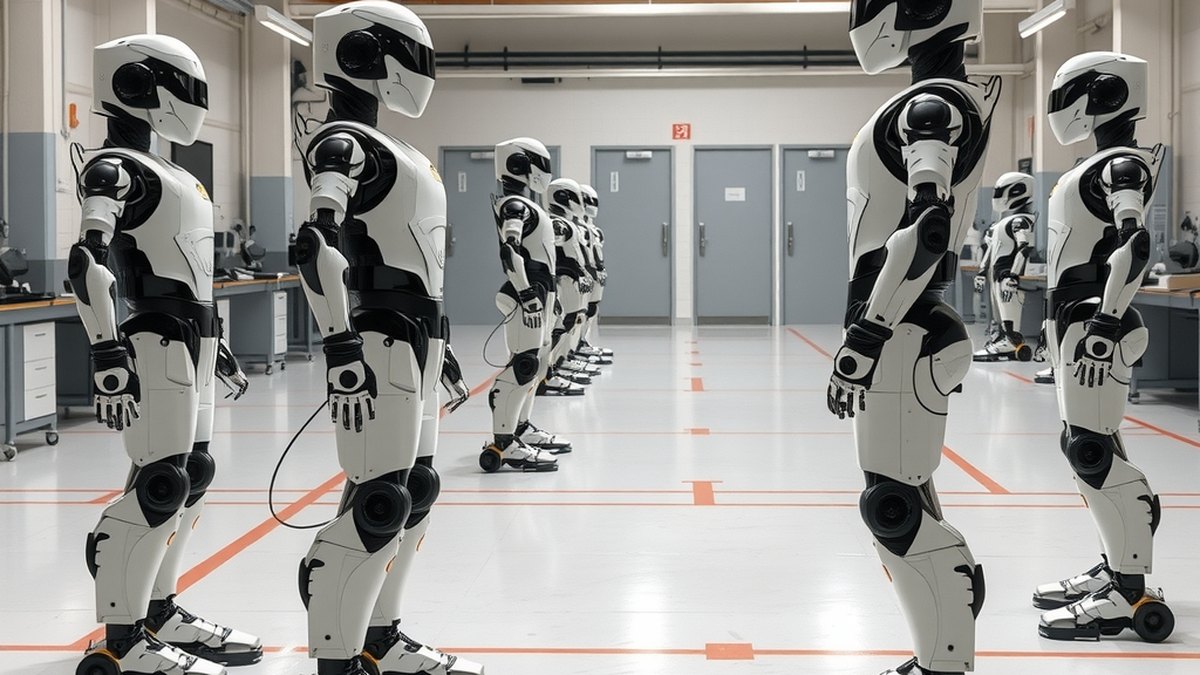
Agility, the company behind the Digit humanoid robot, began trading on Nasdaq on November 5 under the ticker AGLT. Agility says it is the first publicly listed pure-play humanoid robotics company in the United States. The listing came through a business combination with Churchill Capital Corp XI, a special purpose acquisition company, which closed on November 4 and brought roughly $465 million in gross capital before transaction expenses.
How the Listing Happened
Rather than a conventional initial public offering, Agility went public by combining with a listed shell. The combined company is named Agility Robotics, Inc., and its warrants trade under AGLTW. Agility says the capital will help it speed up commercialization of Digit, its flagship humanoid built for physically demanding work.
The structure is worth understanding. A SPAC merger gives a private company a route to public markets without a traditional roadshow, but it also means investors are buying into a business whose commercial track record must still prove itself after the deal closes. For a sector where many well-funded rivals are still in pilot programs or early demonstrations, a listed company with working robots in customer sites is an unusual proposition.
The Digit 5 Order Book
The company points to more than $300 million in committed multiyear orders for its next-generation Digit 5 robot. The release notes that these orders are subject to contractual milestones, product features and specifications, and it does not give an exact figure for the total. In practical terms, these are conditional commitments rather than firm purchase orders. Investors will want to see how many of them convert into delivered units, and at what price.
Peggy Johnson, Agility's chief executive, is the only executive named in the listing announcement. The release focuses on the business combination and the commercial plan rather than on detailed unit economics, such as cost per robot, service revenue or the number of hours Digit works per shift.
Where Digit Works Today
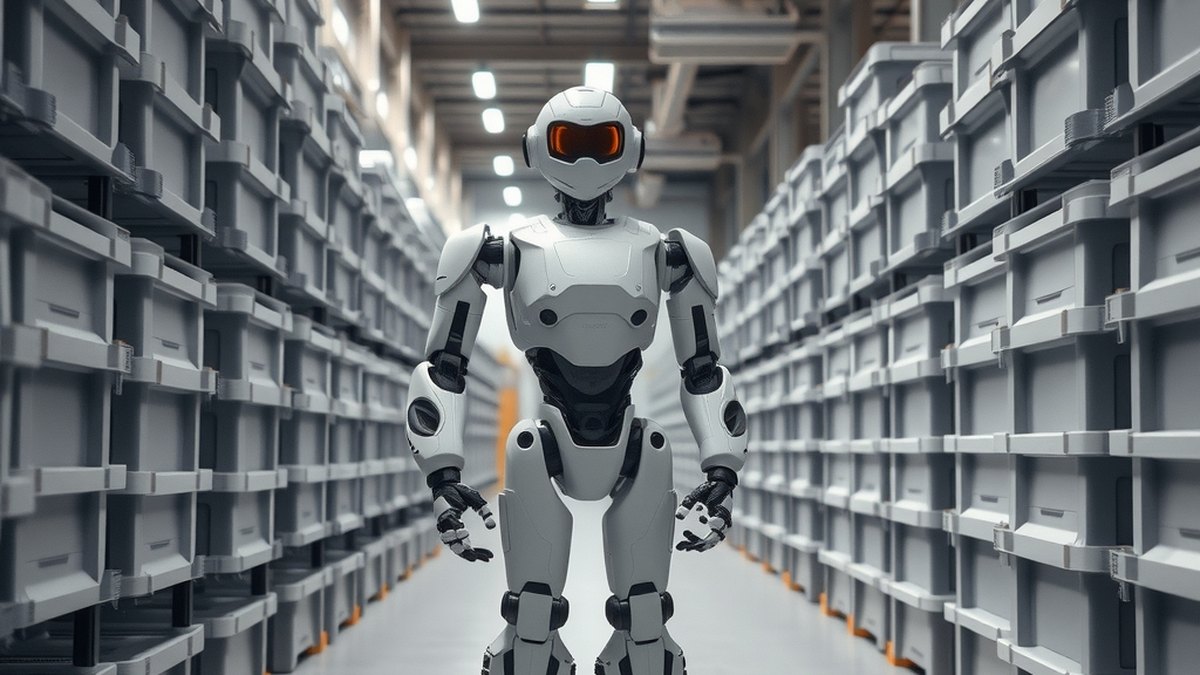
Digit is deployed in manufacturing and logistics settings, where it handles repetitive and physically demanding tasks. Analysts quoted by TechTarget argue that this focus is more commercially grounded than the general-purpose humanoid strategies pursued by some rivals. They also point out that warehouses are among the most heavily automated workplaces, which means Digit has to fit into existing operations rather than replace them outright.
Integration is the hard part. One analyst warns that the extra safety enclosures sometimes needed around robots could cost more than the robot itself. Fitting robots into current workflows without expensive infrastructure changes is therefore a key test for any humanoid vendor. It is a particular challenge in warehouses that already run tight automation systems, where a new machine must coordinate with conveyors, racks and software that were installed for other purposes.
Valuation and Expectations
Agility's valuation is lower than that of some better-known humanoid rivals, even though it has live deployments. One analyst cited by TechTarget attributes that gap to investors favoring future promises over current commercialization. That framing puts pressure on the company to convert its deployments and orders into steady revenue, and to show that the public listing does not simply fund more demonstrations.
Analysts suggest several indicators to watch. These include integration with fleet and warehouse management systems, more live demonstrations, and detailed case studies showing measurable results at customer sites. Each would show whether the company's funding, orders and early deployments can become repeatable operations rather than one-off projects.
What Operators Should Take From It
For warehouse operators and logistics managers, the story is less about the stock and more about whether a humanoid can do enough useful work, safely and reliably, to justify its cost. A robot that performs well in a demonstration may still struggle with uneven floors, changing SKUs or the pace of a busy shift. Buyers will want evidence from comparable sites, clear service terms and a plan for what happens when the robot needs maintenance.
The company's conditional orders also suggest that customers are willing to test the technology at scale, but they do not yet guarantee volume. Any buyer evaluating Digit should ask for references, pilot results and a description of how the system integrates with its warehouse management software.
Why It Matters
Agility's listing is a useful test of investor appetite for physical AI. A public humanoid company offers a window into real deployment economics, including order conversion, service costs and how quickly customers adopt the technology. If the company meets its targets, it could encourage other robotics firms to seek public capital. If it falls short, investors may look more closely at the gap between humanoid demonstrations and paid work.
The coming quarters will show whether the company's capital, orders and early deployments can support a commercial case that holds up outside the press release.