Tesla's Optimus humanoid remains one of the most talked-about robots in the world — and one of the hardest to pin down. Following the company's Q2 2026 earnings report on July 22, the picture that emerges from filings and executive commentary is markedly more cautious than the program's public image. As of mid-July, Optimus production at Tesla's Fremont facility had not started, and the company's own guidance pointed to late July or August for the first line to come online.
Claims Versus Verified Reality
The defining feature of Optimus coverage in 2026 has been the distance between ambition and confirmed fact. Tesla has never published an Optimus production count. The most credible independent reporting puts cumulative builds in the low hundreds — a figure that sits uneasily beside the sweeping deployment narratives that circulate online.
Executive framing has been notably measured. On the Q4 2025 earnings call in January 2026, Elon Musk told investors that Optimus units were primarily for learning and data collection rather than performing productive tasks, describing the program as still in a research phase. He separately acknowledged that Optimus was not being used in Tesla's own factories in any material way. That candor matters: it reframes Optimus not as a robot already at work, but as a platform still gathering the data it needs to become one.
What Has Actually Shipped
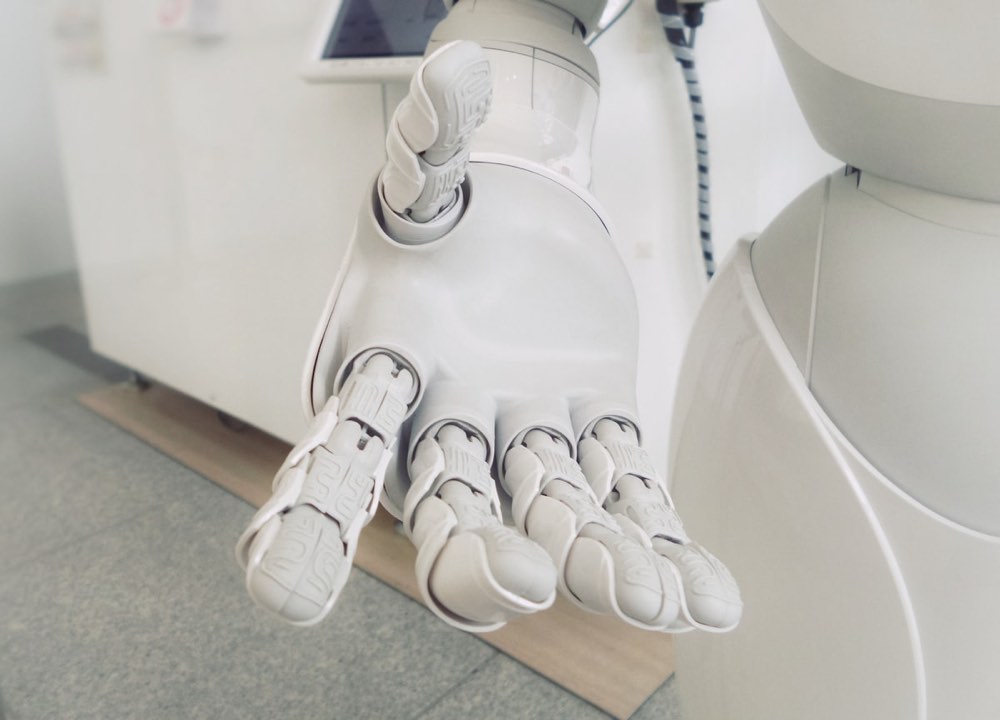
The clearest recent progress is in hardware detail rather than volume. In February 2026, Tesla revealed Gen 3 hands with 50 total actuators — 25 per side — and 22 degrees of freedom per hand, a roughly 4.5× increase in dexterity over the previous generation. Importantly, "Gen 3" refers specifically to those upgraded hands, not a wholesale new robot body; the underlying platform remains the Gen 2 design. Tesla also confirmed integration of its Grok voice AI into the robot.
Dexterous hands are not a cosmetic upgrade. Manipulation — grasping varied objects, applying the right force, handling the unstructured clutter of real environments — is the single hardest problem standing between demo-stage humanoids and useful ones. A robot that can walk and balance but cannot reliably pick up a dish or fold a shirt has limited economic value; the hands are where general-purpose usefulness is won or lost. Progress there is arguably more meaningful than another aspirational unit-count target, and it is the kind of advance that compounds slowly rather than arriving in a single keynote.
The Rest of the Field Is Ahead on Proof
While Tesla commands attention, other builders hold the stronger verifiable records:
- Figure AI has its Figure 03 in production at a reported rate of about one robot per hour, one of the more concrete manufacturing cadences in the sector.
- Agility Robotics continues to log real deployments, and its track record is frequently cited alongside Figure's as the benchmark for verified fieldwork.
- 1X, the Norwegian startup backed in earlier rounds by OpenAI, has moved toward the consumer market, opening pre-orders for its NEO home humanoid with transparent pricing and a confirmed 2026 delivery timeline — a bet on safe human-robot collaboration in residential settings.
Meanwhile, analysts caution that widely circulated claims of tens of thousands of deployed humanoids often do not survive contact with company filings. The sector is scaling genuinely and quickly, but the gap between marketing figures and audited reality remains wide across nearly every player.
Why It Matters
Optimus is a useful lens on the entire humanoid category in 2026: enormous investor enthusiasm, rapid engineering progress on specific subsystems, and a persistent gap between what is announced and what is running. For businesses evaluating humanoids, the lesson is to discount the headline numbers and look at verifiable deployments — production cadence, real tasks completed, and independent confirmation rather than launch-event spectacle.
None of this diminishes the trajectory. Dexterous hands, better onboard AI and maturing manufacturing lines are exactly the ingredients that turn research platforms into working machines. Tesla's manufacturing expertise and vertical integration remain real advantages, and a Fremont line coming online in the weeks ahead would be a meaningful milestone. But the story of Optimus in mid-2026 is a reminder that in robotics, the assembly line — not the keynote — is where credibility is earned. The companies pulling ahead are the ones quietly posting numbers others can check.