Norwegian-American robotics company 1X Technologies has revealed a new 25-degree-of-freedom, tendon-driven hand for its NEO home humanoid, describing it as a breakthrough in dexterity, precision, safety and durability. Announced on 9 July, the hand approaches the roughly 27 degrees of freedom of a human hand — and, critically, 1X says it will be installed on the very first NEO units shipped to households later this year.
Muscle-and-Tendon Mechanics, in a Robot
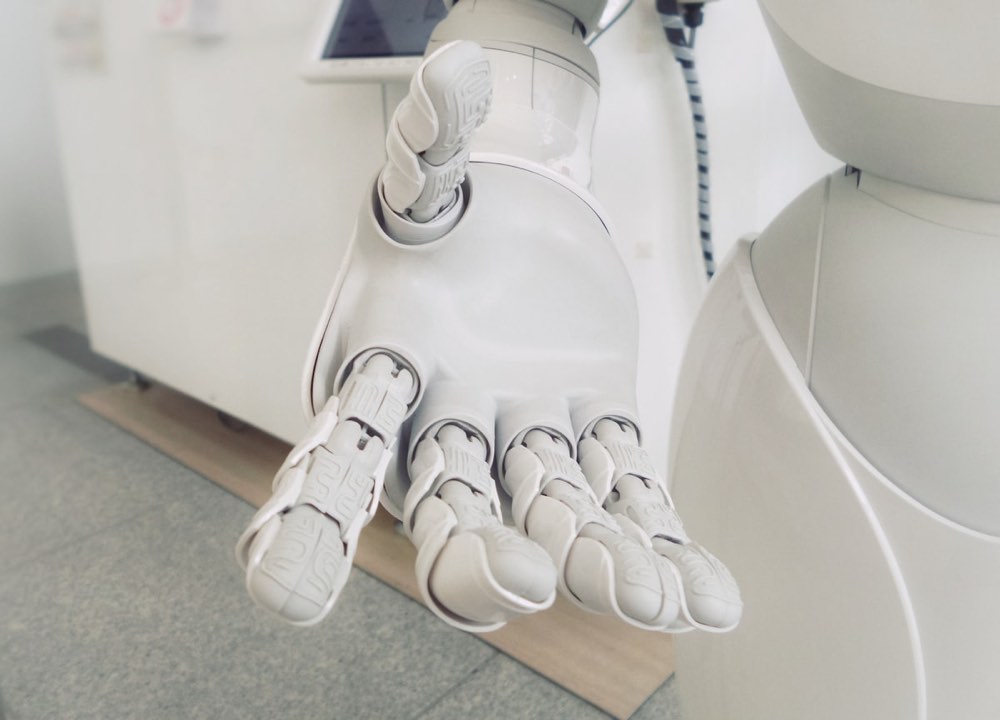
Most robot grippers are stiff, motor-in-joint designs that trade fine control for durability. 1X took the opposite path. The NEO hand places its motors in the forearm, where they pull tendon-like cables to move the fingers — a direct imitation of how human muscle and tendon actuate the hand. That architecture keeps the fingers themselves light and compliant while concentrating power and heat away from the delicate joints.
The results 1X demonstrated are strikingly human. The company showed the hand pouring tea, sorting grapes by colour, plugging in a USB-C connector and communicating in sign language — tasks that demand both delicate touch and precise positioning. The fingers can hyperextend and move extremely quickly, and the whole assembly is rated IP68 waterproof, meaning the robot can literally wash its own hands.
At 25 degrees of freedom, the hand sits close to the human hand's 27, a gap that translates into the kind of everyday manipulation — grasping, twisting, pinching, threading — that has long been the hardest problem in home robotics. Locomotion is largely solved; hands are where humanoids have repeatedly fallen short.
Built for the Home, Priced for Early Adopters
The hand is not a lab curiosity. It is destined for NEO, the household humanoid 1X has been racing to ship. NEO is designed to take on mundane chores: owners give it a list of tasks, schedule when they should be done, and return to a tidier home.
The commercial terms are unchanged from earlier announcements:
- $20,000 for an Early Access unit with priority delivery in 2026 (a $200 deposit reserves a place), or
- $499 per month on a subscription plan.
- Deliveries begin primarily in the United States, expanding to other markets from 2027.
Demand has been substantial. 1X booked 10,000 pre-orders for NEO in just five days after opening reservations last October, and chief executive Bernt Børnich has said shipping will begin before the end of 2026. Manufacturing is already running: the company's 58,000-square-foot NEO Factory in Hayward, California — which it calls America's first vertically integrated, high-volume humanoid robot plant — has commenced full-scale production with more than 200 employees.
Why It Matters
Hands are the bottleneck between a humanoid that walks around a demo stage and one that does useful work in a real home. A robot that can vacuum but cannot fold laundry, load a dishwasher or handle a fragile glass is a novelty, not an appliance. By putting near-human dexterity on the first shipping units rather than a future revision, 1X is signalling that it intends NEO to do genuine chores from day one.
The move also sharpens the contrast in the broader humanoid race. Rivals are scaling production — AgiBot has passed 15,000 cumulative units, and Figure is producing at roughly one robot per hour — but most deployments to date are in factories and logistics, doing repetitive, well-bounded tasks at a handful of named sites. 1X is aiming squarely at the far messier home environment, where no two tasks look alike and safety around people is paramount.
The Caveats Worth Keeping
Enthusiasm should be tempered by what has actually been verified. As of mid-July, no customer delivery of NEO had been independently confirmed, and 1X's own language — "some this year, some later" — points to a staggered rollout against those 10,000-plus pre-orders and a factory capacity around 10,000 units per year.
Questions also linger over autonomy. 1X's demonstration video used a mix of autonomous control and remote operation, so the hand's independent capabilities may be less advanced than the footage implies. The company's "Expert Mode" allows a scheduled, approval-gated human teleoperator to drive the robot inside a customer's home, with safeguards such as camera blurring, no-go zones, US-based operators and an on-device session indicator — but those are company claims that have not yet been independently audited.
None of that erases the engineering achievement. A waterproof, tendon-driven hand with near-human degrees of freedom, produced at volume and destined for shipping consumer units, is a meaningful step. Whether NEO can turn that dexterity into reliable, autonomous help around the house — without a human quietly steering from afar — is the question 2026's first deliveries will finally begin to answer.