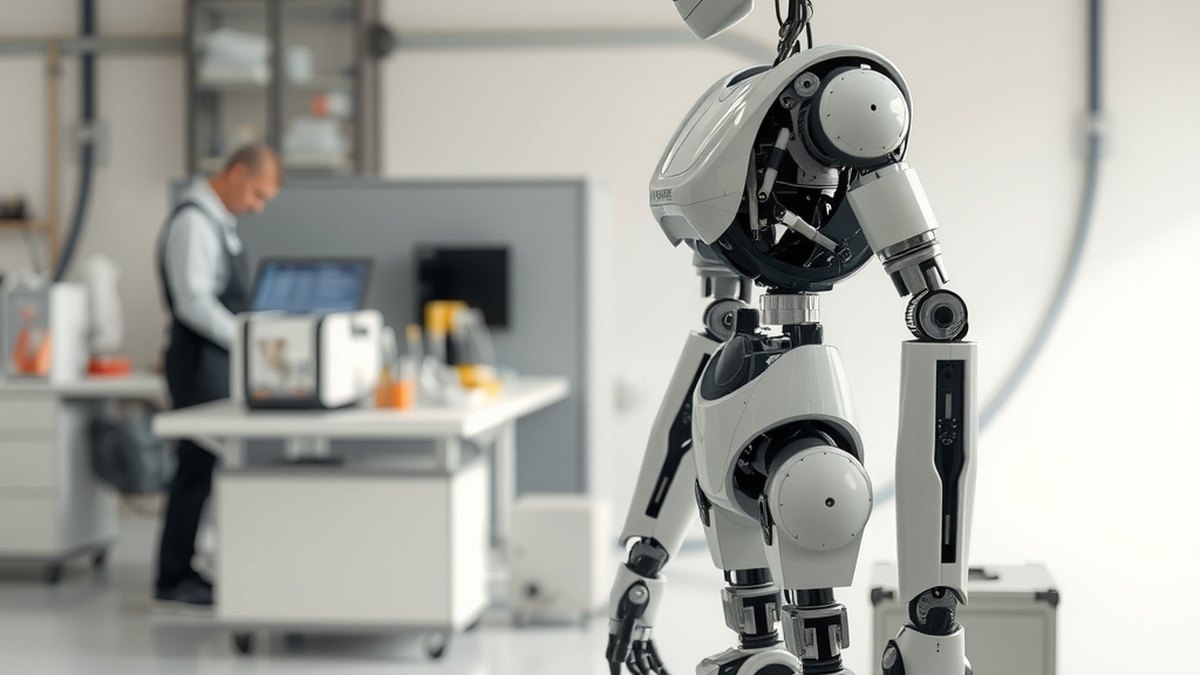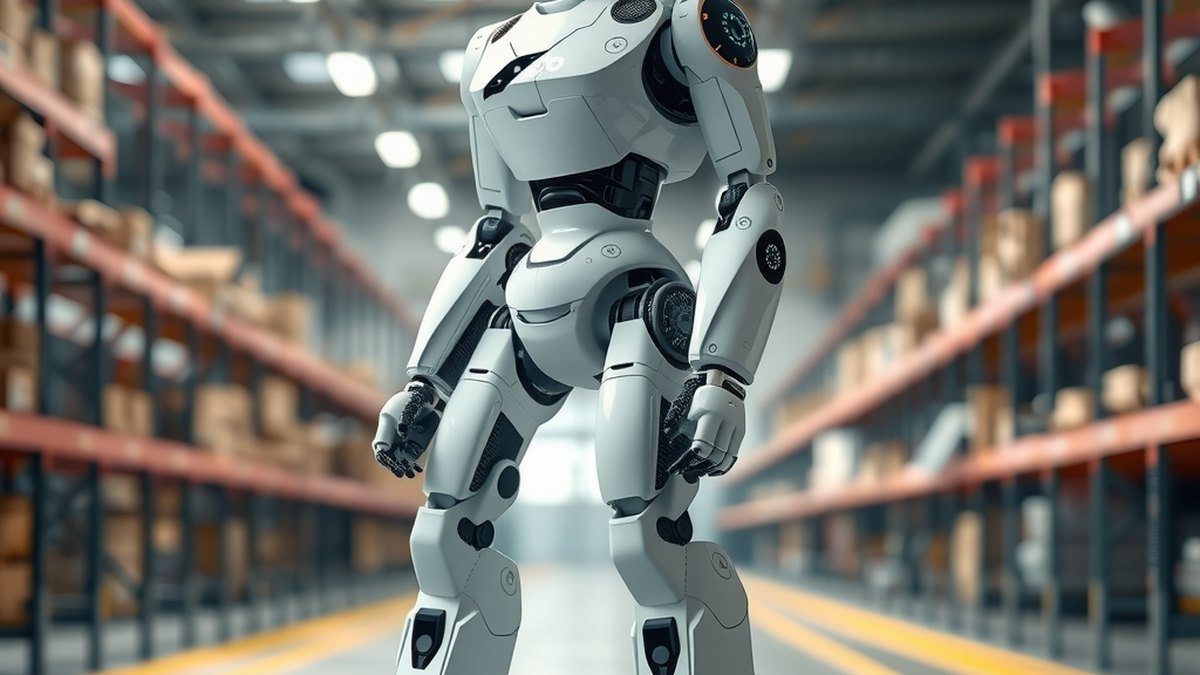
Agility Robotics, maker of the Digit humanoid robot, started trading on Nasdaq today under the ticker symbol AGLT following the completion of its business combination with Churchill Capital Corp XI. The Salem, Oregon company raised approximately $465 million in gross capital, valuing it at $2.5 billion pre-money, and claims the distinction of being the only U.S. publicly listed pure-play humanoid robotics company with proven, commercial deployments in active use.
The SPAC merger closes a two-year pivot for Agility from startup-stage ambition to public-market scrutiny. The capital raise breaks down into roughly $164 million from Churchill's trust account, a $201 million private investment in public equity (PIPE) led by electronics maker Foxconn at $10 per share, and $100 million in equity already received by the company. Existing Agility shareholders rolled 100% of their equity into the combined company, facing a standard 180-day lock-up period before they can sell.
Why Today Matters
Humanoid robotics has been one of the hottest private-market categories for two years, with startups like Boston Dynamics, Figure AI, and Tesla's Optimus division capturing billions in venture backing. Until now, none had chosen the public markets. Agility's IPO marks the first crack in that wall, signaling that at least one humanoid maker believes it can command public-market confidence and access to capital markets to scale manufacturing and deployments.
The timing is also strategic. Over the past eighteen months, companies including GXO Logistics, Toyota, and Schaeffler have begun real deployments of Digit robots in warehouses and factories. Those commercial relationships—not just prototypes—differentiate Agility from dozens of other humanoid startups still burning cash on R&D. Public investors, historically skeptical of robotics capital requirements, may now have a tangible proxy for tracking whether humanoid robots can earn revenue and reach profitability.
The Path to Scale
Agility will use the $465 million to scale production, expand its customer base, and accelerate the next version of Digit. The company has indicated that it intends to build a second-generation robot with improved dexterity and battery life, while ramping units deployed with early customers. If Digit robots prove durable and adaptable across more industrial tasks, follow-on capital will likely flow.
The broader robotics market has grown volatile. Agility's earlier-stage competitor Agbot AI, now private, faced valuation pressure in 2026. Yet warehouse automation budgets have remained robust, and logistics companies' hunger for labor solutions has only deepened. The question Agility must answer: can it convert its current installed base into a flywheel of repeat deployments, upgrades, and add-ons?
Market Signal
An IPO by a humanoid-robotics company sends a message to the venture ecosystem that patient capital—including public-market investors—is willing to back companies building physical AI. Tesla's Optimus division, widely expected to go public as a separate entity within a few years, has one fewer excuse to delay. The window for claiming "first" in public humanoid robotics will close once Tesla makes its move, and Agility's debut today may accelerate that timeline.
Trading under AGLT and AGLTW (for warrants), Agility enters a public market that remains fascinated by AI and robotics narratives, but skeptical of cash burn and long payoff horizons. The stock's first-day performance will do much to shape how investors price the next wave of humanoid robotics IPOs.