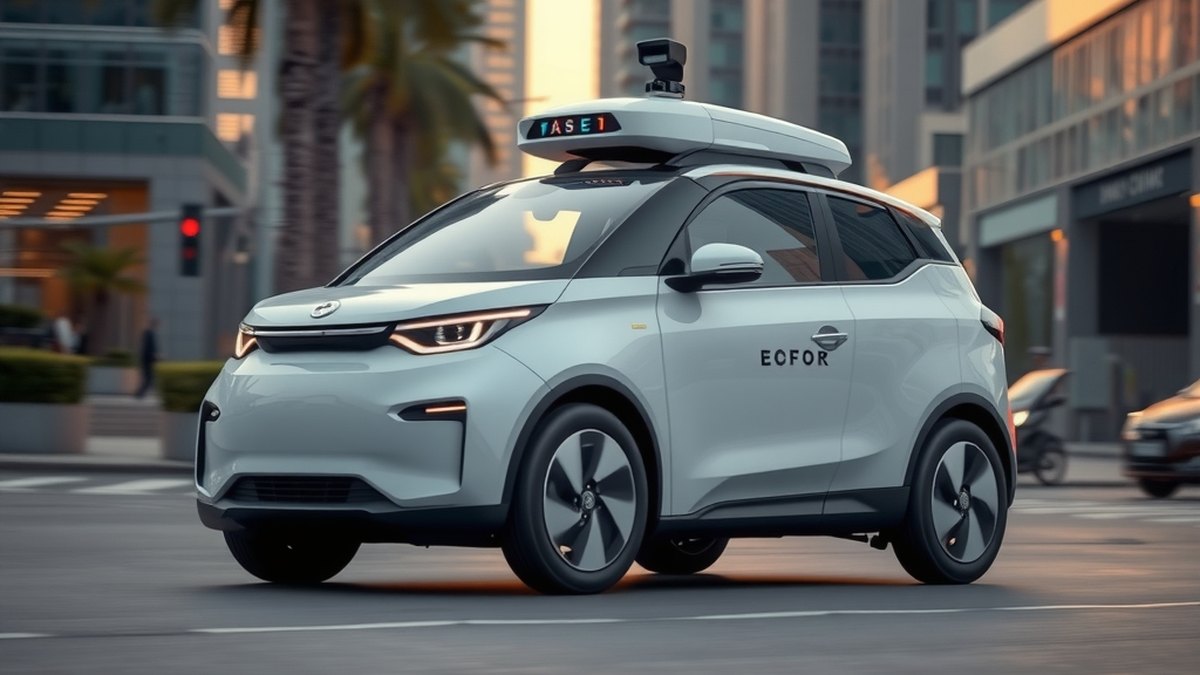
XPeng's robotaxi unit has won approval for citywide Level 4 demonstration operations in Guangzhou, the Chinese carmaker's home city. The approval, announced on October 26, lets the company move its robotaxi service from closed testing toward real rides with the public. It is also a concrete milestone in XPeng's push to become a supplier of autonomous driving technology for ride-hailing platforms.
What the Approval Allows
The license covers demonstration operations across the whole city rather than a limited zone. XPeng plans to admit riders gradually, using invitation codes issued through its XPeng Yoyo mini program. The Yoyo brand was unveiled on October 8, and the robotaxi is built on XPeng's GX platform.
The GX platform takes a vision-first approach and does not use lidar or high-definition maps, which sets it apart from some rivals that depend on those sensors. The approval came from Guangzhou authorities, although available coverage does not name a specific regulatory agency or license number. Demonstration operations are a stage short of full commercial service, so riders will still be part of a controlled rollout.
Production and Timeline
XPeng's first mass-produced robotaxi, which the company describes as the first fully self-developed robotaxi pre-installed from the factory, rolled off its Guangzhou line on May 18. In January, XPeng had already obtained a road-testing license for intelligent connected vehicles in Guangzhou and began regular Level 4 testing on public roads. In March, the company set up a dedicated robotaxi division covering product definition, research and development, and operations. Earlier reporting said pilot operations were expected in the second half of 2026, which the new citywide approval now makes concrete.
Chief executive He Xiaopeng has said the company aims to offer passenger service without a safety driver by 2027. Available coverage does not give a more precise date for fully driverless operations, so that target should be read as a goal rather than a confirmed schedule. The vehicles reportedly use four in-house Turing AI chips delivering 3,000 TOPS of compute, paired with a second-generation vision-language-action model for autonomous driving.
A Different Business Model
XPeng has said it plans to act mainly as a technology provider and partner with ride-hailing platforms rather than running a fleet alone. If that holds, the company's revenue would come from software, vehicles and autonomy services supplied to operators, with expansion to other Chinese cities and eventually overseas markets.
That approach resembles the model of some Western rivals, where a technology company works through platform partners. It also means XPeng's progress will depend on how quickly those partners can deploy vehicles and how regulators in each new city respond.
Why It Matters
The Guangzhou approval adds to a fast-growing field of robotaxi operators, and it shows how the market is shaping up. Baidu's Apollo Go reported weekly fully driverless rides peaking above 350,000 in March 2026, with a footprint of 28 cities by August. Waymo reported 500,000 paid weekly rides across 10 US cities in March. XPeng is much smaller by those measures, so its significance lies in its approach and in its home-market base.
For the robotics and autonomy sector, the lesson is that approvals now come in stages. Demonstration licenses, invitation-based rider access and partner-led business models are the steps that build the operating record regulators will later rely on. Companies that clear each step with real operating data will be better placed to win the broader permits that unlock revenue.
Investors and city planners should watch three things over the next year: the number of vehicles actually running under the license, the safety record of the vision-only stack, and whether XPeng can convert its partnerships into paid rides. The approval is an important step, but the 2027 driverless target still depends on results that have not yet been reported.
How It Compares in China
Guangzhou is also where XPeng builds its vehicles, which gives it an advantage in iterating on hardware and software close to the factory. Volkswagen Group China received a Level 3 road-test license in Hefei around the same period, a reminder that foreign and domestic automakers are all pursuing different stages of autonomy in parallel.
The robotaxi program will be judged on safety and ride volumes rather than on the carmaker's car sales. The company has not published rider numbers or fleet sizes under the new license, so progress will be easiest to measure once invitation-based service begins.