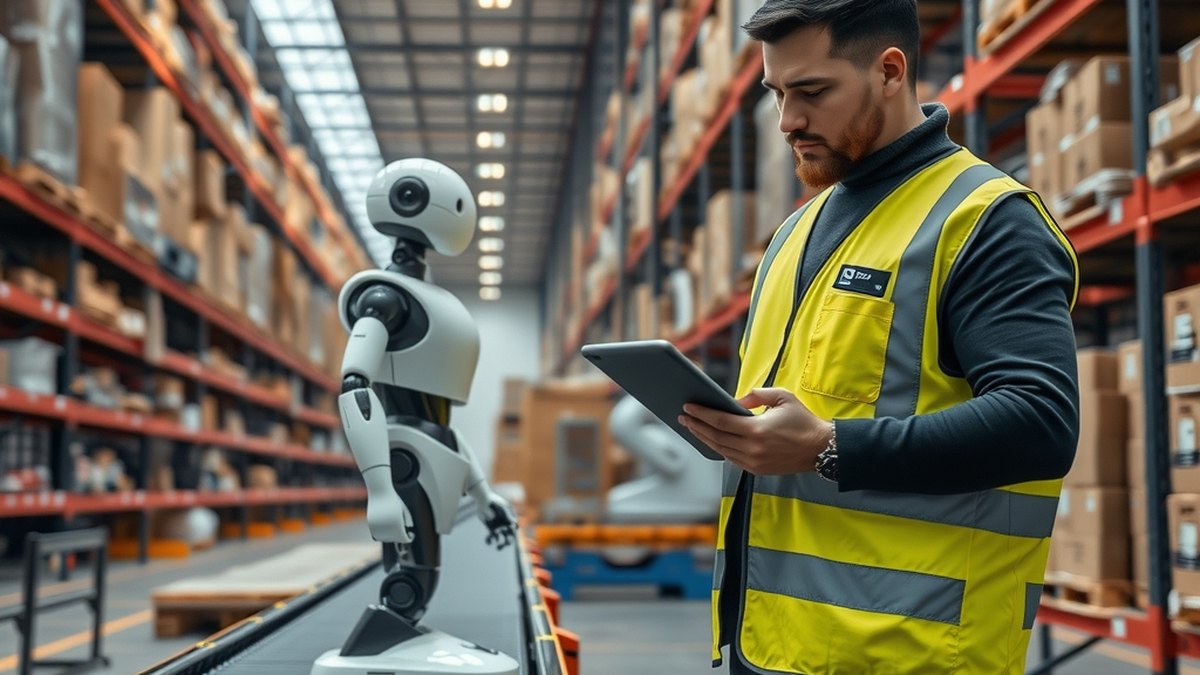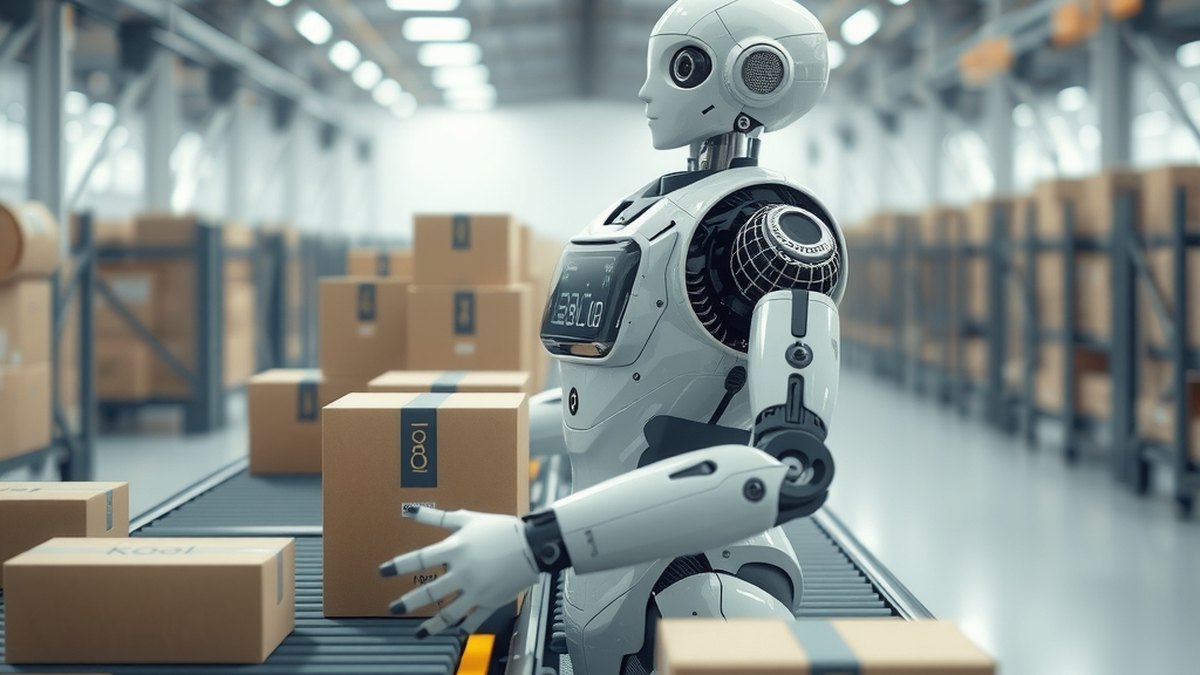
ROBOTERA's M7 humanoid robot sorted parcels live for attendees at the APEC CEO Summit, held November 17 to 19, as the Chinese embodied-intelligence company showcased what it calls real-world logistics work. The company says its robots now operate across more than 10 logistics centers, a claim that places the demonstration in the context of daily operations rather than a laboratory test.
The APEC Demonstration
ROBOTERA was invited to the APEC CEO Summit for a second consecutive year, according to a press release it distributed on November 19. The company describes itself as the only embodied-intelligence firm focused on real-world productivity to receive consecutive invitations. Its founder and chief executive, Jianyu Chen, and co-founder Yue Xi attended the event.
The highlight was the M7 performing live parcel sorting in front of international business leaders. Chen also spoke at APEC Finance Night under the title "Putting Robots to Work at Night," a session focused on turning embodied intelligence into practical productivity through logistics deployments. The release contains no direct executive quotes beyond that session title.
Demonstrations are a familiar way for robot makers to make their case, but parcel sorting is a useful test because it combines speed, handling of irregular objects and repetition across long shifts. The release does not say how many parcels were sorted during the demonstration or how the robot performed under unscripted conditions.
Deployments and Partners
The release names China Post and SF Express as partners and says humanoid robots operate across more than 10 logistics centers. It also reports parcel induction rates above 1,500 parcels per hour. Those are company figures and have not been independently verified. The release does not describe the number of robots deployed, how long each deployment has run, or how much of the work depends on human supervision.
Even with those gaps, the customer names matter. Postal and express operators handle large volumes of parcels under tight timing, and they usually test new equipment in a limited way before expanding it. If the deployments hold up, logistics could become one of the earliest proving grounds for general-purpose humanoids outside factories.
Parcel sorting also suits a humanoid form only partly. Wheeled or fixed machines already handle much of the conveyor work, so a humanoid must justify itself by reaching, lifting and moving between stations that were built for people. That argument will be tested on cost and uptime, not on demonstrations alone.
XPeng Previews Its Own Humanoid
The same week brought another signal from China's robotics sector. XPeng has scheduled its 2026 AI Day for November 25 in Guangzhou under the theme "ORIGIN," and the event will feature its IRON humanoid. According to the company's press materials, IRON stands about 170 centimeters tall and has 76 degrees of freedom across the body and 21 in each hand. XPeng says three in-house Turing AI chips deliver up to 2,250 TOPS and that the robot runs its physical AI foundation model on-device, without teleoperation.
XPeng also says the latest IRON rolled off a newly commissioned production line on September 8, 2026, after eight years of research and development. In August, the company said its robotics business raised more than US$900 million at a post-money valuation above US$6.3 billion. These are company statements, and the event itself has not yet taken place.
Why It Matters
The ROBOTERA and XPeng news shows where humanoid development is heading: away from demonstration clips and toward repeatable, measurable work. Logistics is a sensible starting point because the tasks are clear, the environments are controlled and the output can be counted in parcels per hour.
The harder question is reliability. A parcel sorter must run hour after hour, handle damaged or oddly shaped packages and recover from errors without stopping the line. Companies that publish throughput numbers invite scrutiny, and the most useful next data point will be an independent account of uptime, error rates and labor savings.
What to Watch
Three things will show whether these deployments are scaling. The first is whether ROBOTERA publishes more detailed operating figures, such as robot counts and uptime. The second is what XPeng reveals about IRON's real-world tasks at its November 25 event, including whether it shows work outside a controlled setting. The third is whether postal and express operators announce broader purchases, which would signal confidence beyond pilot programs.