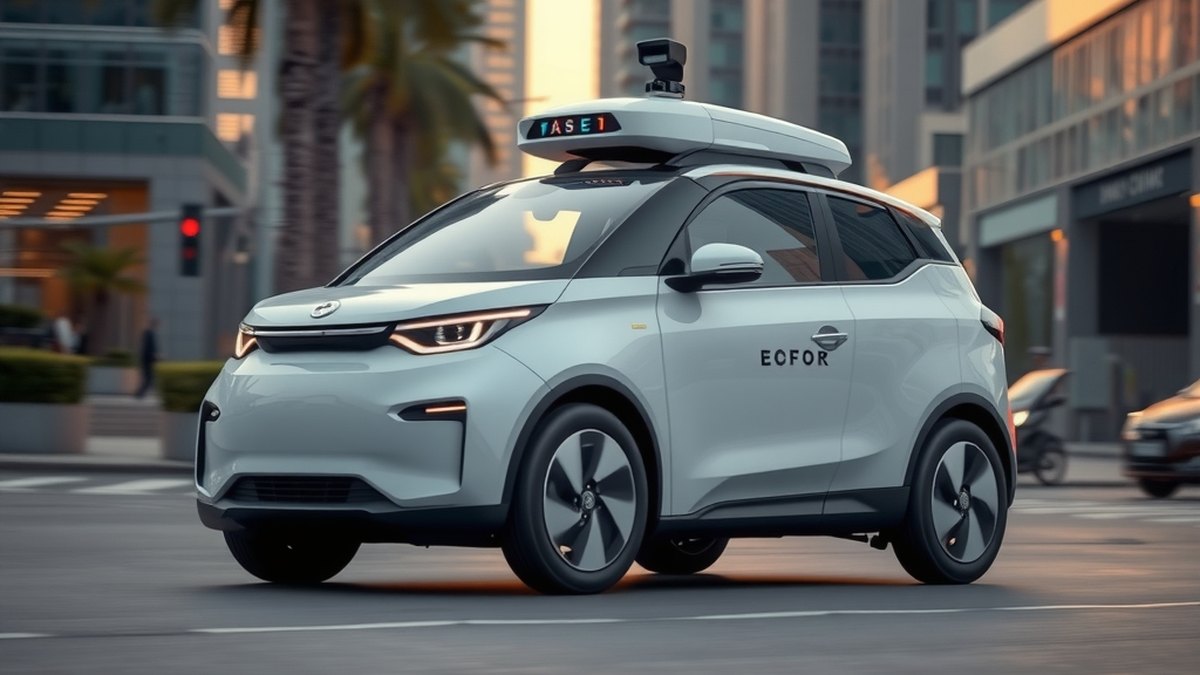
Tesla's robotaxi business in Texas is closing in on Waymo, the leading autonomous operator in the state, though the comparison rests on registrations rather than rides. Registry data shows Tesla's fleet at 1,204 vehicles as of late October, against 1,259 for Waymo. The near tie is a notable milestone for a company that has long promised a driverless transport network. The numbers also show why readers should look past the headline count.
How the Count Works
The figures come from the Texas Autonomous Vehicle Tracker, an account that counts vehicles registered with the Texas Department of Motor Vehicles and is powered by a third-party data service. It reports registrations, not active service, and that distinction is central to reading the numbers correctly.
On the latest snapshot, Tesla's fleet is split almost evenly between 631 Model Ys and 573 Cybercabs, the company's steering-wheel-free, pedal-free vehicle. The most recent batch added 124 Model Ys in late October. Four days earlier, on October 27, Texas records listed 1,051 authorized Tesla vehicles, and Cybercabs outnumbered Model Ys for the first time, 544 to 507. The Model Y batch then reversed that order, which shows how quickly the mix can change from one registry update to the next.
Other operators on the same snapshot were far smaller. Avride had 344 autonomous taxis and Zoox had 63. One report says Tesla's robotaxis operate in Austin, Dallas and Houston and have accumulated nearly 3 million driverless miles.
Registrations Are Not Service
The sources are explicit about the limits of this data. A registration does not show how many vehicles are carrying riders or where they operate. Registered vehicles also do not necessarily enter service right away.
Drive Tesla Canada reports that Tesla has said it produces more Cybercabs than it can register and deploy, and that it sometimes pauses the Cybercab production line to avoid building excess inventory. If accurate, that suggests the constraint is not manufacturing alone. Getting vehicles registered, validated and placed on the road appears to be a bottleneck, and each stage can slow the public-facing fleet count.
The same outlet's author projects that Tesla could pass Waymo within days if its growth continues. That is a projection, not a reported event, and it depends on batches like the late-October additions continuing. The article does not name an external source for the fleet counts beyond the registry tracker, so the figures are best treated as a snapshot.
Why It Matters
Robotaxi competition is increasingly judged on fleet counts that regulators, investors and rivals can see. Registry data is therefore an early signal, even though it is incomplete. A near tie in registrations is different from a near tie in paid or active trips, and the gap between those two measures is where the real competition will be decided.
The Texas numbers also give a sense of scale. Waymo's 1,259 registered vehicles and Tesla's 1,204 both sit far above the other operators on the list. Whatever happens in the next few snapshots, these two companies are the only ones in this tracker operating at a size that makes a direct comparison meaningful.
There is also a lesson about the Cybercab itself. For months the vehicle was a promise; its appearance in the Texas registry in the hundreds shows that production has moved beyond a handful of prototypes. What the registry cannot show is how often those vehicles are on the road, how many riders they carry, or how well they handle the cities where they operate.
What to Watch Next
- Whether registered vehicles translate into active rides in Austin, Dallas and Houston.
- How quickly the Model Y and Cybercab mix shifts in the next registry snapshots.
- Whether Waymo's count keeps pace, since it is the benchmark Tesla is chasing.
- Whether Tesla or independent trackers publish figures on vehicles actually in service.
Reading the Race Fairly
Tallies like these are easy to turn into a scoreboard, and the coverage so far invites that. A fair reading keeps three caveats in view. First, the data is a registry, not a utilization report. Second, batch additions can swing the model mix and the total within days. Third, the claim that Tesla could overtake Waymo soon is an author's extrapolation from recent growth.
The most useful number to track next is not the fleet total but the share of vehicles actually carrying riders. Until that figure is published, the Texas race is a registration contest with a clear leader and a closing gap, and the real test of Tesla's network will come on the road, not in the paperwork.